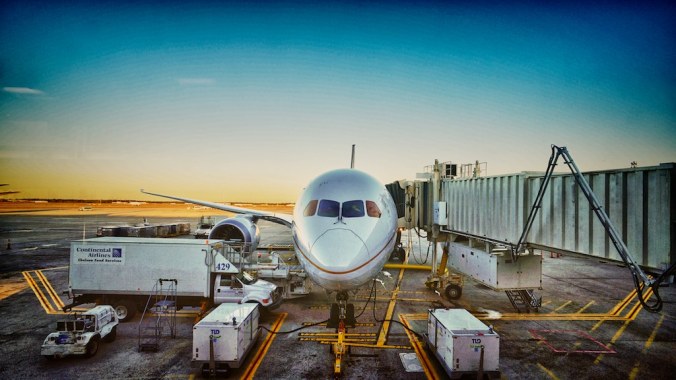
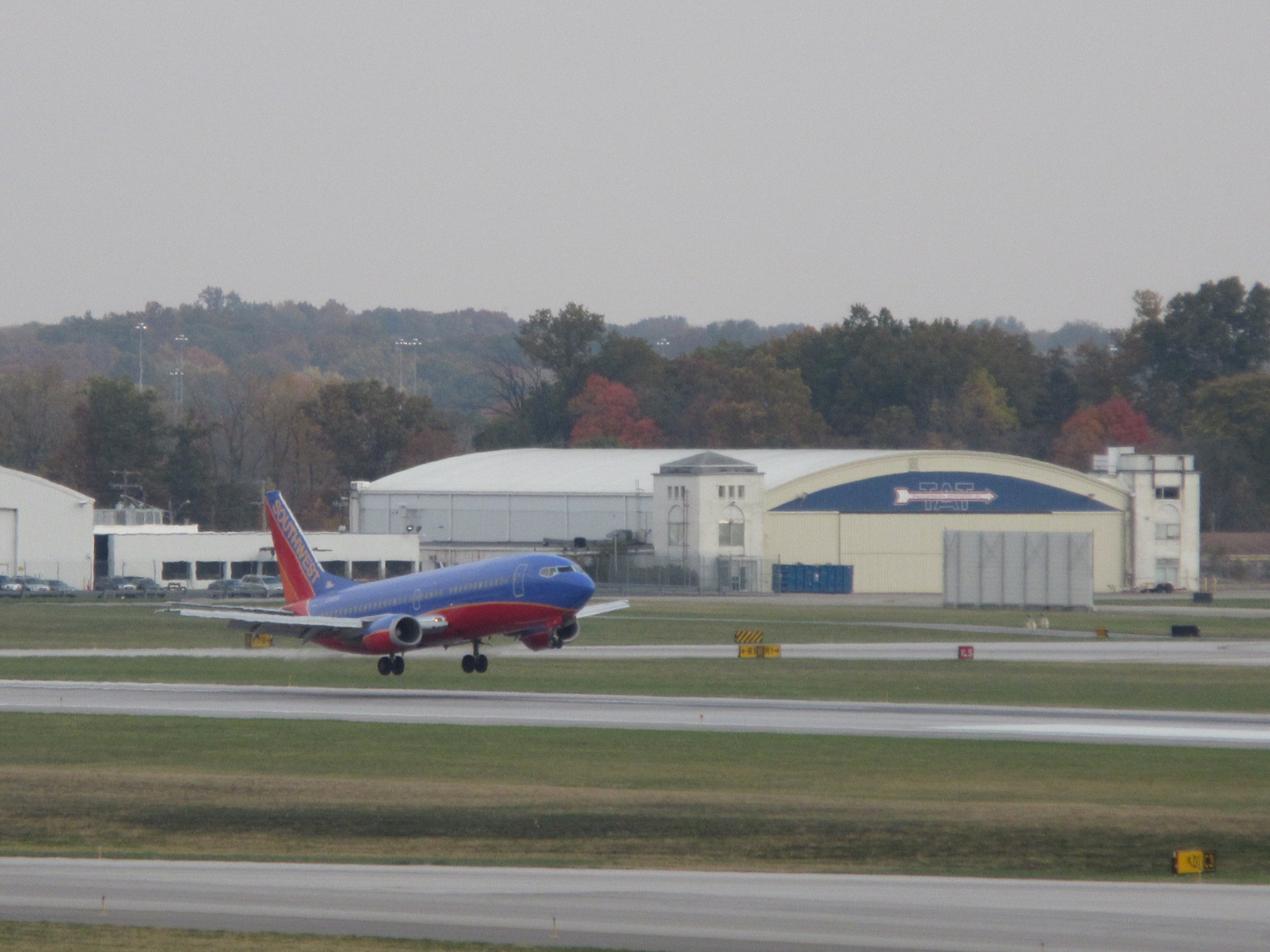
By Peter Rood – Awaiting Departure, CC BY-SA 2.0, https://commons.wikimedia.org/w/index.php?curid=24301274
It’s time for another installment of Airport Tales, where seasoned travelers share some of their favorite (and not so favorite) moments from airports around the world. Next up is Jeffrey Roehr, better known as JR. He has racked up at least a bazillion miles (that’s the official number) jetting to various corners of the globe. Seriously, if a mere mortal were to attempt to match his distance record, he/she would have to start traveling today and continue on for… well, practically forever! As you might imagine, JR knows a lot about a lot of different airports and he has some pretty interesting tales to tell.
Background:
Tell us a little about yourself, how you got the travel bug and give us an idea of where your travels have taken you (locations, miles, etc).

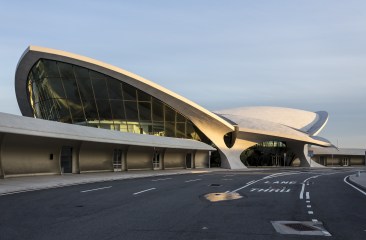
By DearEdward from New York, NY, USA CC BY 2.0 http://creativecommons.org/licenses/by/2.0
My name is Jeff, but everyone calls me JR. During my life I have lived in 7 different states, and overseas in the UK, Singapore, and Taiwan. I am 56 years old and have been married 29 years to a wonderful lady. I love to laugh, and I try (I try!) to get along with everyone. However this specifically excludes you if you start kicking my seat halfway between Houston and Tokyo, or if I ever see you giving a flight attendant or a gate agent a hard time.
I started my international traveling in 1970 when our family moved to the UK, and the travel bug bit me hard as a teenager with weekend trips from the UK to all sorts of cool places in Europe. By now, I can count visits to over 40 countries with an estimated 6,000 hours in the air as a passenger. In terms of total travel I have documented over 2.5 million actual air miles, including 1.2 million just on United. Just for fun, I also have a WordPress website with some of my travel experiences/tales, tips, and tricks. http://www.paxview.wordpress.com
Airport stuff:
Favorite airport to fly into/out of (in terms of approach/departure) and why:
I do not think there is any finer approach to see than SFO, and that left-turn and bank just in front of the Golden Gate bridge on a bright and sunny winter morning after finishing a TransPac flight. It is just the nicest way possible for America to say “Welcome Home” (although I still have hours of flying ahead). Yes, the DCA approach is also nice and scenic, but it is not SFO.
Prettiest airport and what criteria did you use to make that decision?
Probably like everyone else who has been there, I am going to say Singapore/Changi. And unless you have been there, it is so hard to describe. Yes, they really do have indoor butterfly gardens. Yes, indoor amusement park. Yes, waterfalls, trees, gardens. Yes, a 6 story high open atrium. Yes, smiling friendly staff, great shopping, and so clean… They even have a Dunkin Donuts in Changi (I mean talk about perfection)
Favorite airport to visit (in terms of facilities) and why:
Surprise!!! Not Changi. And I only say that because I have seldom (never ?) used any facilities at Changi other than the SQ Silver-Kris lounge. I do love Narita, the stores there are fun, but the best overall facilities might actually be in Hong Kong (the new airport). Special mention goes to the somewhat hidden casino in Frankfurt (FRA).
 In your opinion, what qualities make for a good airport?
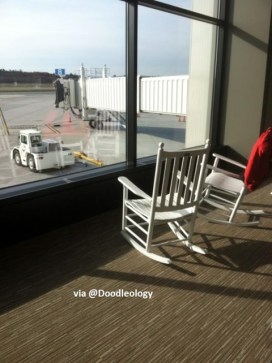
Let me start with what is bad… Tight, cramped, dirty, noisy, smelly, dark & dingy, too crowded. (Yes La Guardia, I’m talking about you…) So when I find an airport that feels roomy, is bright and well lit, is not annoyingly noisy (no echoes) and is not too crowded… Love it. There are several that fit that description, but here in the USA they are all small airports. Among them are T.F. Green in Providence R.I. (PVD), Greensboro N.C. (GSO), and my former hometown airport of Portland Maine (PWM) where they even provide wooden rocking chairs by sunny gates.
 Airport you’ve been to with the best coffee? food? Other amenities? Best coffee is tough. I am going to exclude Starbucks and Dunkin Donuts at any airports, since they are so universal. I do not remember the name of the restaurant, but it was in Zurich, and it was the best tasting cup of coffee I have ever had at an airport. So it’s Zurich airport for coffee. Food is a toss-up tie between Legal Seafoods in Boston (Logan BOS Term C), and here in my new hometown with Pappadeaux’s seafood in Houston (Bush IAH Term E).
Strangest airport-related incident: It was 1999, I was flying from Singapore to Jakarta (my first time going to Jakarta) to meet my sister and her family who had recently moved there. Coming out of immigration, I see her, but her back is facing me. So I start to rush forward with my arms outstretched to give her a big surprise hug. About 2 paces away from her I am intercepted and stopped cold by her bodyguard, complete with his pistol jabbed into my ribs. Welcome to Indonesia.

By 颐园新居 (Own work) [CC BY-SA 3.0 (http://creativecommons.org/licenses/by-sa/3.0)%5D, via Wikimedia Commons
Worst airport-related moment: Three weeks after 9/11, I am doing a hand carry of some new silicon wafers from our test facility in Boston to an assembly house in Korea (BOS-FRA-ICN). I have all the paperwork I need, the name of the customs broker to meet up with in Incheon (ICN), and the wafers are carefully packaged inside a hermetic carrier. Problem is… all the instructions are in English and nobody at Korean customs appears able to read English. And they don’t understand my reaction when they try to open the container. End result was two rifles and a pistol being pointed at me while someone else was screaming at me in Korean. I ended up with a Korean soldier’s knee pressed into my back, keeping me face down and immobile on the floor.
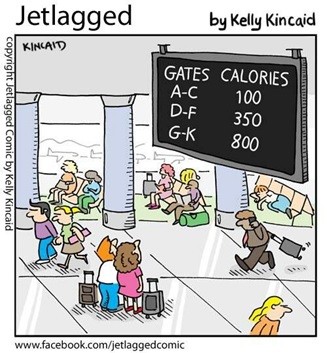 Easiest airport to navigate and why? Domestically, I think SFO has done a great job since they remodeled back in the 90’s. Orlando’s MCO is also really easy to get around in, and the short train ride is actually a nice feature. At both airports there is a good amount of walking, but they have gone to lengths to add in some entertaining features (Yes, I mean the stores in Orlando) and good signage. The ever changing ‘museum’ exhibits in SFO on the walk between security and the gates are actually fun, I often bypass the moving walkway so I can wander through.
Most difficult airport to navigate and why? Ohhh boy… This is not easy. I have never liked trying to connect in JFK from International to Domestic, so much so that I have avoided JFK for the past 15 years. Completely 100% avoided it. It’s just a nightmare. When considering only domestic flights, it is Chicago ORD – which is probably my least favorite airport anywhere. If you ever run the mile needed to connect from a late arriving regional jet at terminals E/F to catch an on-time International flight out of terminal C, you will know why I hate ORD so much.
What’s your best advice for travelers on navigating airports? First: Calm down. Seriously. Calm Down! It seems like every trip I watch somebody just losing their mind in an airport. Stop. Take a breath. Look around. Even ask someone, there are plenty of airport workers and security/police around. Most of them actually like to help. It is not rocket science. Second advice is travel light. Don’t try to get thru security and navigate an airport with a tight connection on a busy day while carrying too much. That is asking for trouble and stress. Pack light, wear comfortable shoes (NOT slippers or sandals), and you will move fast and easy thru every airport.
 Is there anything airports can do to better assist travelers? It sounds silly, and obvious, but SIGNS. In some cases there are too many, too distracting, too much to read. In other airports there are too few, or they are too small, and you easily can head away from a gate in the wrong direction. If I could design an airport, as you walk out of every gate there would be a BIG RED ARROW pointing either left or right so you know which way to the exit and/or baggage claim.
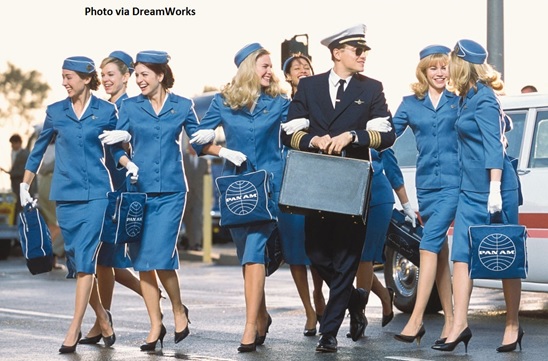
If you could operate any piece of airport equipment/vehicle, which would it be? Any piece? Any?? The planes of course!! But there are these very strict & annoying laws, rules, and regulations that are in place to stop that. Confession; Frank Abagnale is my airport idol.
Wow! Thank you SO MUCH for sharing your stories and expertise with us JR! I have made a note to never, ever, ever carry wafers (silicon, Necco, or any other kind) into Korea! Yikes! If you want to read more of JR’s stories you’ll definitely want to check out his blog at paxview.wordpress.com. You can also follow JR on twitter – @JR_justJR
 It’s
It’s 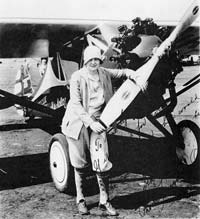 Phoebe Omlie was born in Iowa in 1902 and fell in love with aviation as a teen when she saw a fly-over to commemorate a visit from President Woodrow Wilson. She went on to get her pilot’s license and performed as a stunt pilot and wing walker. All of that is really awesome but then she did something which, in my opinion, makes her even more awesome still – in 1927 she became the first female to earn an airplane mechanic’s license!
 Ms. Todd was born in 1865 in Washington DC. As a girl she showed an affinity for mechanics and invention – interests she later attributed to her grandfather’s influence. In 1906 she designed a biplane based on the wings of an albatross, which she had been able to study at the natural history museum. She was eventually able to build the plane with funding from a benefactor and in 1910 it flew 20 feet. Are you kidding me with this? I can’t even build a decent paper airplane, let alone a functioning biplane. Ms. Todd ROCKS!
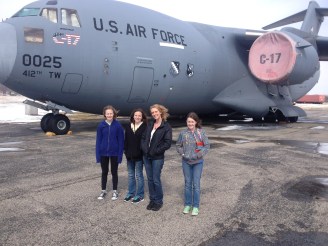
 Last year for Women of Aviation Worldwide Week I rounded up a bunch of teenage girls and dragged them off to an aviation museum. I was a bit uncertain about how the trip would go since none of the girls had expressed any interest in airplanes or aviation. As it turned out, everyone had a really great time. Here are some things that I learned:
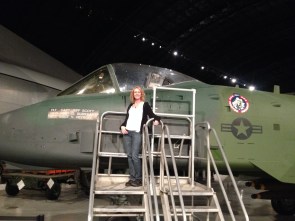 – Simulators are AWESOME.
 On the count of three I want you to name an aviation job. Ready? One… Two… Three! OK, hands up all of you who came up with one of the following: pilot, flight attendant, gate/ramp agent, airplane mechanic, air traffic controller. How many of you are thinking to yourselves that you’d really like to work in aviation, but those jobs just aren’t a good fit for you? Well I have some good news. You don’t have to be a pilot or a flight attendant or an air traffic controller to work in aviation. Want proof? Read on!
 My Journey
 At the time I was working for a large Fortune 500 company and I although I liked my employer and didn’t mind my job, I really had no enthusiasm for the industry. I kept wishing I could work at something that actually interested me. Unsurprisingly, aviation kept coming to mind. At first I dismissed it – after all, I’m definitely NOT
  The Search
 It Takes All Kinds
 Pavement Specialist – In case you haven’t noticed, airports have a LOT of pavement. Someone has to know the best way to maintain it, how and when to replace it, etc.
 Airplane Watcher – Yes, you read that correctly! In the ops department at the passenger airport there is someone (or possibly several someones) who watch airplanes, sometimes live and sometimes on video. Large airports subscribe to tracking systems to monitor flights and eventually we probably will too. But for now, we use a more basic tracking system (think flightaware) and we like to confirm visually if we can. I am going to lobby to have that responsibility transferred to me ASAP! In the meantime, I console myself by remembering that those lucky airplane watchers almost certainly also have other, far less awesome tasks that they are also required to perform.
 So, Do You Want To Work In Aviation?
 Soon after I started this blog several people mentioned that it reminded them of how much they used to enjoy the airport… before they had to deal with it every day. After months/years of the “daily grind”, the airport lost its magic somehow. I remember being a bit dismayed. Lose its magic? Oh dear! Will that happen to me too? Well fear not intrepid readers – I’m happy to report that after over a year on the job I still love the airport as much as I did the day I first walked in the door!
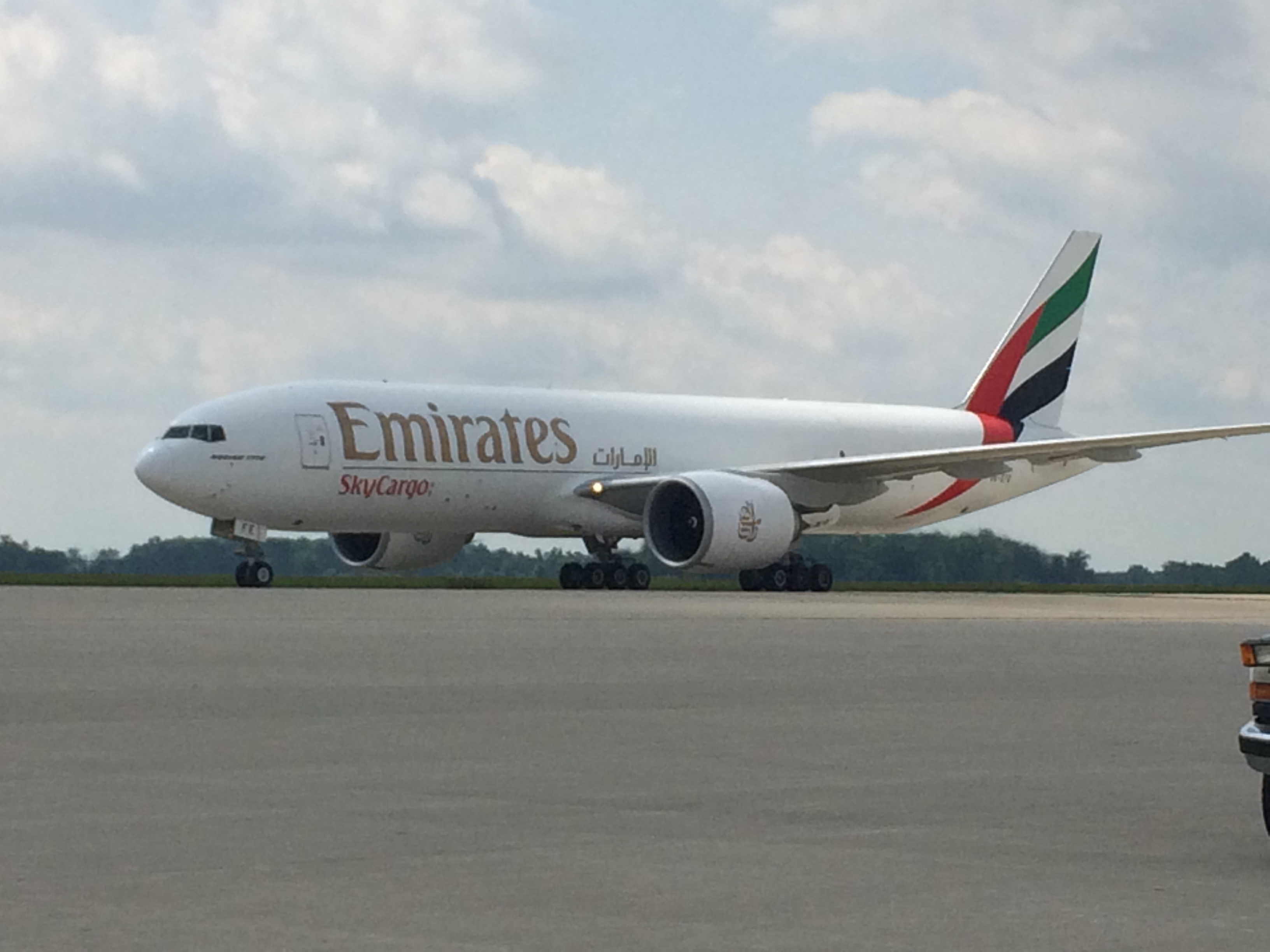
 I don’t care how much of a grind my job gets to be, I don’t see anything ever changing my love of airplanes. I’ve seen more planes take off, land and taxi by the window than I can possibly count and I still get just as excited every time. Airplanes are never boring to me. Besides, I never know what might fly in. F-18s, T-38s, KC-135s, and AirForce 2 have all “dropped by” while I’ve been there. Plus I’ve seen some really cool business jets. And you never know what chartered airplane might be sitting on the ramp. There is always something new and interesting to see.
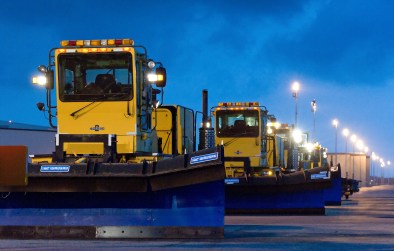
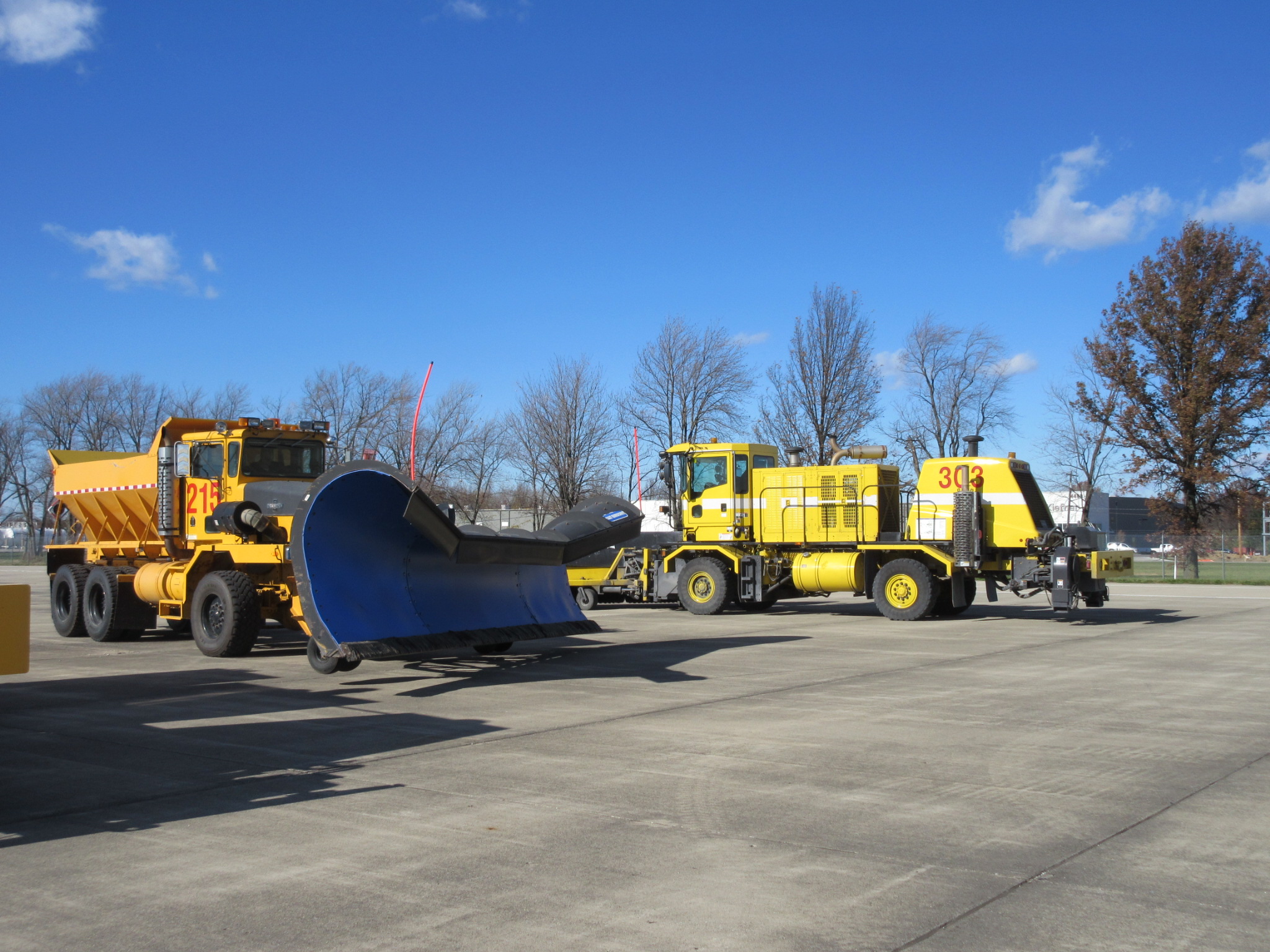
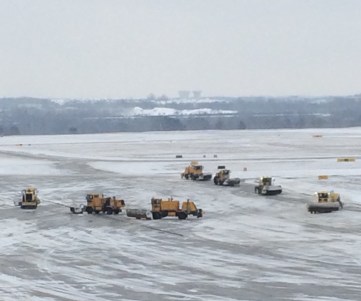 Thought I might not like snowplows as much now that I’ve sat in one? Wrong!!! Sure, I sat in one, but not while it was snowing. Or on a runway. Or in a convoy. Or at night. I still love broom trucks too. And I still love deicing rigs. And ARFF equipment. And mobile conveyors. Basically, if it gets to go tooling around the airfield then I’m a fan. Well… OK, I’m not a fan of the honey wagons (aka lav trucks). Sorry, but I’ve gotta draw the line somewhere!
 Be honest – when I didn’t mention the mobile stairs in that last paragraph you thought maybe, just maybe, I’d gotten over my thing for stairs trucks. Nope! They are still my favorite piece of ground equipment! About a year ago someone with a sick sense of humor parked a set of motorized stairs outside my office where I would have to see it day after day. Can you believe it is STILL parked there – nearly a year later? That’s cruel and unusual punishment! I found out recently that the airport conducts auctions periodically to sell off assets that are no longer needed. I asked if we ever sell stairs trucks and I got a blank stare in return. I had to explain what a stairs truck is. Again. Clearly, I still have work to do!


 Tell us a little about your background as a pilot, how you got started, what you do now and where your travels typically take you.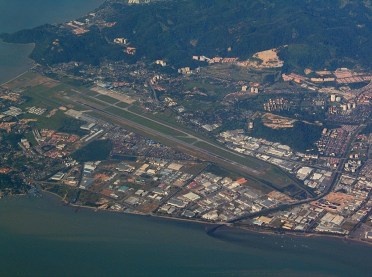




 Go ahead and admit it – you were just wondering what has been going on lately in the world of airports. Well today is your lucky day! Not only have I gathered up the latest airport news, but I also provide my (somewhat warped) take on it, free of charge! You’re welcome!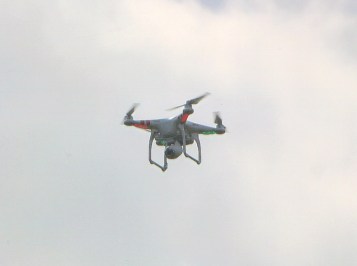

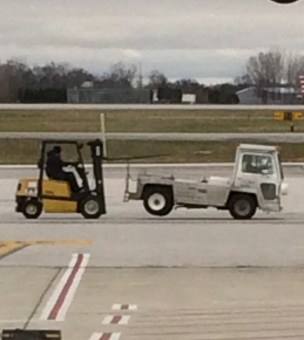

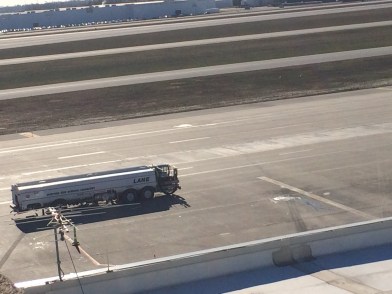
 I have mentioned in previous posts that it’s common to see ARFF (Airplane Rescue and Fire Fighting) out on the airfield. In fact, there are days when it seems like ARFF is EVERYWHERE. And no, it isn’t because they are protecting the mobile stairs from me. (The airport police handle that.) Although I’ve seen ARFF providing medical assistance inside the terminal, I’d never seen them assisting an airplane in trouble until recently. And then it happened twice in 24 hours!
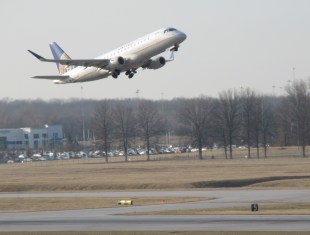
 About a month ago I was enjoying my lunch break as I often do – plane spotting on top of the parking garage. I happened to see an airplane on approach to runway 28L. I looked down to fiddle with my camera when suddenly something didn’t sound right. I looked back up in time to see that the plane on approach had decided to abort and go around – right over my head!
 Much to my disappointment, my airport is not on LiveATC, nor do I have a functioning scanner so I am not able to listen to communications with the tower. Otherwise I would have had a better idea about what was going on. I decided to hang around a bit and wait for the plane to come back in and land. By now I had lost sight of it, but I figured it would likely try again on 28L so I walked over to that side of the garage and I waited. And waited. And waited. I’ve been watching airplanes come and go long enough now that I have a pretty good idea of how long it should take to get back on final. This seemed to be taking quite a bit longer than usual.
 Just as I was thinking I would have to give up because my lunch break was almost over, several ARFF vehicles came blasting out of their facility on the eastern edge of the airfield and took up positions along 28L. One fire truck was near the start of the runway, one was along taxiway C1 and another was along taxiway C3. Then there was an ambulance and a smaller ARFF vehicle waiting on the ramp.
 At long last the plane appeared once again on approach to 28L. It seemed to take forever before it finally got its wheels on the ground and then it made the shortest stop I have ever seen an airplane that size make. As soon as it got stopped the ARFF vehicles quickly surrounded it. I couldn’t tell from my vantage point exactly what they were doing, but the airplane sat on the runway for several minutes. Then finally it began to taxi down the runway, with the ARFF vehicles following behind. I
  expected it to turn towards the terminal and head to a gate to let the passengers off. Instead it went directly to a maintenance hangar. I realized then that the plane had been able to stop so quickly because it didn’t have any passengers or luggage on board. I never did find out what exactly happened with this airplane, or even whether it officially declared an emergency. However, given the ARFF response it seems likely that it did.
 The next morning I was chatting with a coworker when we heard sirens which grew louder and louder. Sure enough ARFF went blasting down the ramp and took up the EXACT same positions as they had the day before. My coworker is one of those lucky souls whose cubicle is along the windows, so she has a clear view of 10R-28L from her desk. Several of us crowded around to watch out the window. About that time the department manager appeared. He gets text messages whenever there are emergencies at the airport. He told us that the plane coming in had reported brake problems and a possible flat tire. He noted that if the landing went horribly wrong the plane could easily careen into our office. Then he wished us a nice day and left. (Have I mentioned that he has an incredibly dry sense of humor?)
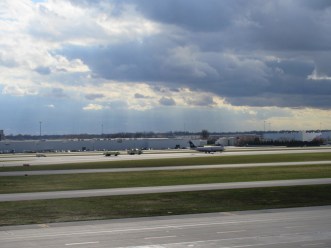 Undeterred we continued to watch out the window. As before, the plane landed and managed to stop very quickly. Not quite as fast as the plane from the previous afternoon, but still much more quickly than usual. Once again the plane was immediately surrounded by ARFF vehicles. Once again it sat on the runway for several minutes. This time, however, when it finally started to taxi it turned towards the terminal and headed for a gate with all the ARFF vehicles in tow.
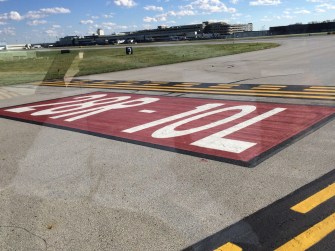 During both of these events planes continued to land as usual on the north runway, which allowed airport operations to continue without too much disruption. However, all that will change next spring when the north runway will be closed for 6 months for resurfacing. During that time we’ll be operating as a one-runway airport.
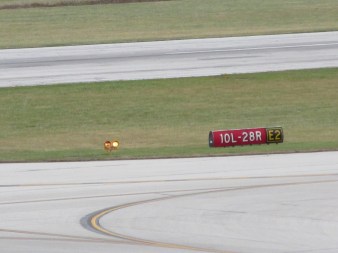 Even something as basic as airfield mowing has to be carefully scheduled. You can’t mow near an active runway, and if there is only one runway you can’t shut it down for mowing. So all mowing and regular maintenance activities will have to happen in the wee hours of the morning when there aren’t any regularly scheduled flights. Since it’s















 Tales from the Terminal