Author’s note: My apologies for the long delay between posts. I took ill rather suddenly right after I published my last post. I required emergency surgery which sidelined me for several weeks. I am finally on the mend and ready to get back to being an aviation fan-girl running loose at the airport and (of course) blogging all about it.

By Zzubnik (Own work) Public Domain, Wikimedia Commons
I’ll admit, for a long time I wasn’t a podcast listener. I knew what they were (sort-of) but didn’t figure that there were any out there that would be of interest to me. Boy was I so totally WRONG!!! Beginning last summer I began making a series of long drives back home to visit my ailing father. In search of something aviation-related to listen to while driving I decided to download a few aviation podcasts that had been recommended by friends. Those few led me to others and the next thing I knew, I’d become a regular podcast listener.
What makes podcasts so awesome? Not only do they provide a lot of excellent, detailed information on the world of aviation, but they also come with really wonderful communities of listeners who encourage and support each other. I discussed two of my favorite podcasts in my last post – Airplane Geeks and Plane Talking UK. However, there are several other amazing podcasts out there that you really don’t want to miss!
 Airline Pilot Guy
This podcast is hosted by Captain Jeff Nielsen, who flies for a major US carrier. Originally a one-man show, Jeff has since added several co-hosts including Miami Rick, who recently added the 747 to the long list of Boeing airplanes he knows how to fly, Dr Steph, a physician and general aviation pilot, and Captain Nick who flies A330s/A340s for a major UK carrier. The podcast covers the latest aviation news as well as addressing items of interest and questions sent in by listeners.
Aside from being incredibly informative, the show is just plain fun. Jeff and his co-hosts broadcast live, usually via Youtube, but you can listen to the recorded podcast any time. That said, if you get a chance to watch it live, DO IT! Seriously, the comments and discussion in the chat room in combination with the live podcast are typically completely hilarious. It never fails to lift my spirits. In fact, I always watch the show live and then go back listen to the podcast. I almost always learn something that I missed the first time and I find that I laugh just as much.
One of my favorite episodes: Secret Number Two Really you could pick just about any episode – they are all great. However, this is a recent one in which they cover an accident involving a Cirrus SR20 and I thought the discussion was very insightful.
 Plane Safety Podcast
This little gem of a podcast is hosted by Pip, a pilot for a European airline. As the name suggests, this podcast focuses on the safety aspects of aviation. Pip discusses many of the day to day issues faced by pilots and airlines, often drawing from current events. He also has several episodes in which he reviews well-known aviation incidents from the past, points out some of the key contributing factors and highlights how they have influenced the policies and procedures of today. When he isn’t discussing safety, Pip often talks about his latest trip which gives the listener a behind-the-scenes look at what life as a pilot is really like.
One of my favorite episodes: Nats, Brexit and the Millenium Falcon No, I did not pick this because it is the most recent episode (although it is). I chose this because it includes an interview with an experienced First Officer that is the BEST INTERVIEW EVER. Seriously, check it out.
 AviatorCast
Hosted by Chris Palmer, a private pilot and founder of Angle of Attack, this podcast features guests and topics that focus on general aviation and flight training. Chris is passionate about encouraging current and future pilots, and it really shines through in the way he talks about flying.
One of my favorite episodes: My Scariest Pilot Moment I think it takes a lot of guts to share a frightening or difficult moment that you’ve had as a pilot. I really like that Chris was willing to put this out there so that others can learn from his experience.
 Flying and Life
Hosted by Mike, who works for a major US carrier, this podcast gives us a detailed look into the world of an airline dispatcher. I have always wondered just what exactly a dispatcher does, so I really enjoy this podcast and I have learned a lot. For example, did you know that a dispatcher shares operational control with the captain of the flight? Me either! It is pretty incredible all the things that dispatchers are responsible for.
One of my favorite episodes: Building Routes Part 1 Wow! A lot of thought goes into what route you’ll be flying the next time you head out on vacation!
 Some Podcast Regulars You Should Follow:
There are several folks who don’t have podcasts of their own, but often contribute to the podcasts listed above. If you are interested in aviation and/or podcasting, I recommend giving these guys a follow on twitter:
Micah (Airplane Geeks, Plane Talking UK, Airline Pilot Guy): Micah uses his background in radio to submit amazing pieces of audio feedback that are amusing, poignant and never fail to get you thinking.
Captain Al (Plane Talking UK, Plane Safety Podcast, Airline Pilot Guy): Al’s background as a captain with a major UK airline allows him to add valuable experience and perspective on pretty much any aviation topic.
Nevil (Plane Talking UK, Airline Pilot Guy):Nevil is an aviation enthusiast who is also a self-proclaimed analogue recording geek. Enough said.

 I’m not typically a big fan of Mondays. Sure I love my job and where I work but like any other Monday-through-Friday employee, I often find Mondays pretty tough to take. However, this past Monday two really awesome things happened, both of them involving podcasts.
 It was from Jennifer Parkinson, also known as “Jenny in Rome.” She had sent in audio feedback about how her husband had suggested an aerial tour of Rome for her birthday. She went on to say that she had recently read a blog post about a discovery flight and it inspired her to get flying lessons instead. Imagine my shock when she stated that the blog post was mine! (
 The next awesome thing happened Monday night when I was invited to be a guest on the
  The information comes from the Department of Transportation. They take a sampling of passenger tickets (around 10%) and publish the data quarterly. The airport uses a software program which analyzes the information and makes it easier to dig in to. The data is apparently quite detailed and includes not only the point of departure and destination but connections, ticket prices, the airlines and even historical trends. Because the information is several months old by the time it is published, the airport will also look at trends in the community (what businesses are adding jobs or have moved into the area, etc.) to get an idea of whether demand for certain routes is growing.
 Oh and in case you are wondering, yes my dad really did throw away the TV when I was in 6th grade and we didn’t have another in the house for 11 years. Well, except for a tiny little TV that one of my brother’s friends gave him. We hid it in his toy box and would get it out on Thursday nights when my parents worked late. The reception was terrible and we only got one channel but watching Magnum PI was a tradition with us until the little TV died. Shhhh – don’t tell my parents!
 You may recall a while back I wrote about some of the exciting first experiences I had when I started my job over a year ago – first time hearing the bird cannon, first time walking out on the ramp, etc. Well it has taken some time but I finally have another collection of firsts to share.




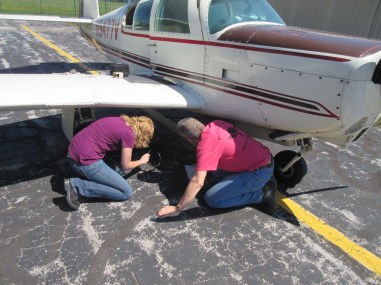 Apparently he doesn’t listen to the
  At this point I piped up, “Before I drove here this morning I reviewed the airport map, the sectional chart and checked the weather. Winds are out of the south at 4 knots. I presume we’ll be using runway 28 today. Can you tell me how the Class C airspace around the pax airport will affect our flight?” I think he might have been just a little relieved to discover that although I’m rather silly, I’m actually not completely clueless. He confirmed that we would, in fact, be using 28 and that we would stay in the proper altitudes to work around the Class C airspace.
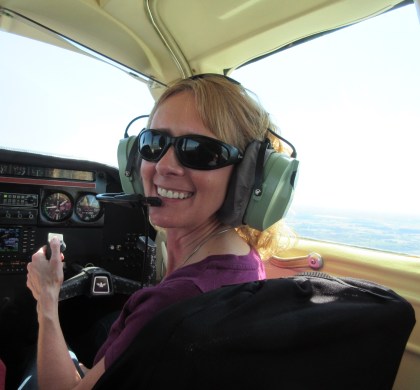
 It was at this point Greg said, “OK, we’re ready for take off. Are you ready to fly the plane?” Um… what? Wait – remember that whole “I’m not flying this plane” thing? Yeah, I wasn’t kidding! I was just about to remind him of this but the next thing I knew we were accelerating down the runway and then we lifted up and I saw the ground gracefully fall away beneath us and at that point I pretty much forgot everything else. Oh. My. God. We’re FLYING!!!
 If my instructor had any flaws it would have to be that he was really good at ignoring my protests. No matter how many times I told him I was NOT going to fly his plane, he somehow got me to make some gentle turns as well as climb and descend. We flew east and then turned south to fly over my neighborhood. I was surprised to find it didn’t take too long for me to recognize where we were. We circled around and I was clearly able to see my house, my yard, the neighbors’ houses… Hey! I didn’t realize those guys had such a big swimming pool!
 Visibility was amazing. I looked out and could see not only the pax airport, where I spend so much of my time, but also the cargo airport and the GA airport – and at least one other airport as well. The sight of all those airports was actually rather comforting. It was nice to know there were so many places to land if we needed them.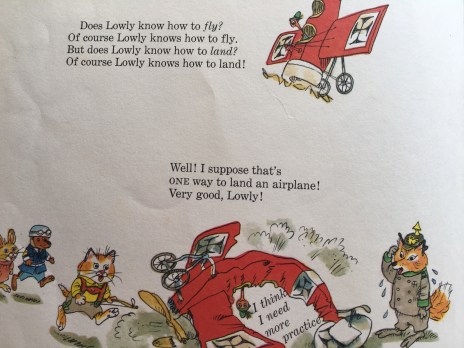
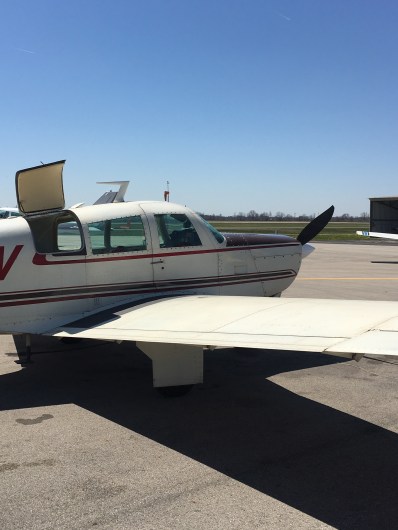
 We taxied to the ramp, parked the plane and we both climbed out. My first thought upon putting my feet on the ground was… wait a minute… did I just fly an airplane??? Oh holy cow I DID!!!! I just flew a freaking airplane!!!! I looked around thinking for sure the FAA or the NTSB would he there to haul me away, but nope.
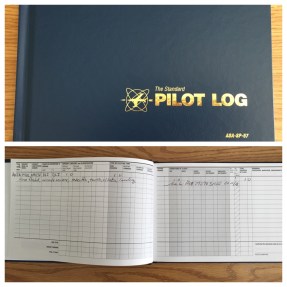 Still trying to wrap my mind around everything that happened, I gave Greg a very sincere thank you. Not only was he good teacher with the patience of a saint, but he managed to get me to fly his plane despite my adamant assertions that it wasn’t going to happen.

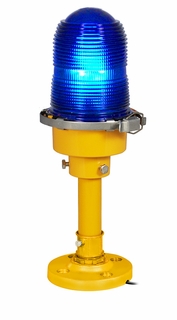

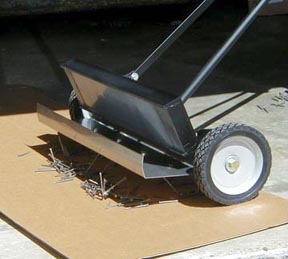



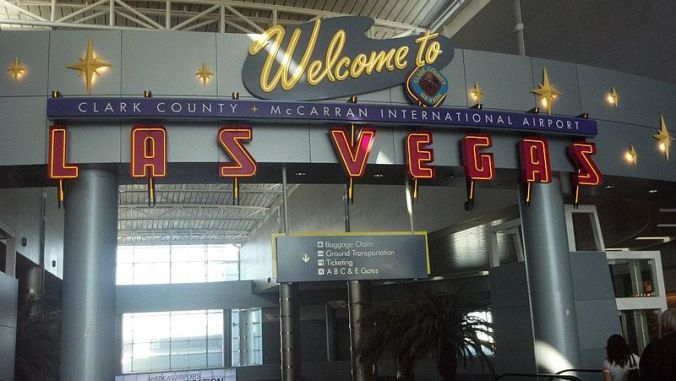
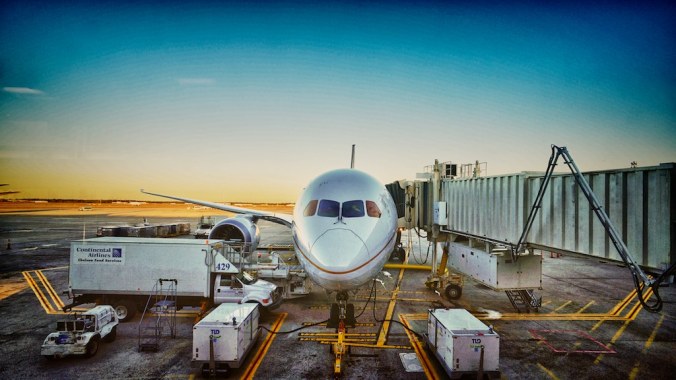


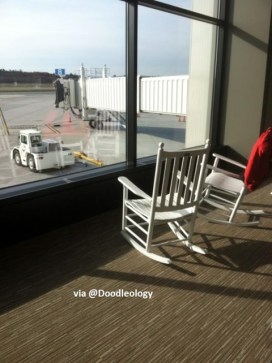 In your opinion, what qualities make for a good airport?
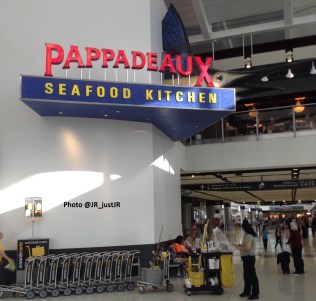 Airport you’ve been to with the best coffee? food? Other amenities? Best coffee is tough. I am going to exclude Starbucks and Dunkin Donuts at any airports, since they are so universal. I do not remember the name of the restaurant, but it was in Zurich, and it was the best tasting cup of coffee I have ever had at an airport. So it’s Zurich airport for coffee. Food is a toss-up tie between Legal Seafoods in Boston (Logan BOS Term C), and here in my new hometown with Pappadeaux’s seafood in Houston (Bush IAH Term E).
 Easiest airport to navigate and why? Domestically, I think SFO has done a great job since they remodeled back in the 90’s. Orlando’s MCO is also really easy to get around in, and the short train ride is actually a nice feature. At both airports there is a good amount of walking, but they have gone to lengths to add in some entertaining features (Yes, I mean the stores in Orlando) and good signage. The ever changing ‘museum’ exhibits in SFO on the walk between security and the gates are actually fun, I often bypass the moving walkway so I can wander through.
 Is there anything airports can do to better assist travelers? It sounds silly, and obvious, but SIGNS. In some cases there are too many, too distracting, too much to read. In other airports there are too few, or they are too small, and you easily can head away from a gate in the wrong direction. If I could design an airport, as you walk out of every gate there would be a BIG RED ARROW pointing either left or right so you know which way to the exit and/or baggage claim.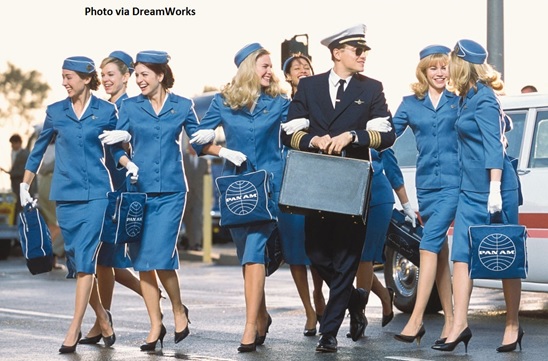
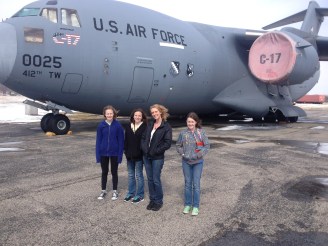 It’s
It’s 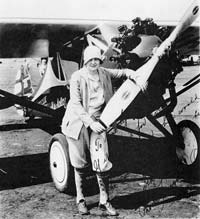 Phoebe Omlie was born in Iowa in 1902 and fell in love with aviation as a teen when she saw a fly-over to commemorate a visit from President Woodrow Wilson. She went on to get her pilot’s license and performed as a stunt pilot and wing walker. All of that is really awesome but then she did something which, in my opinion, makes her even more awesome still – in 1927 she became the first female to earn an airplane mechanic’s license!
 Ms. Todd was born in 1865 in Washington DC. As a girl she showed an affinity for mechanics and invention – interests she later attributed to her grandfather’s influence. In 1906 she designed a biplane based on the wings of an albatross, which she had been able to study at the natural history museum. She was eventually able to build the plane with funding from a benefactor and in 1910 it flew 20 feet. Are you kidding me with this? I can’t even build a decent paper airplane, let alone a functioning biplane. Ms. Todd ROCKS!
 Last year for Women of Aviation Worldwide Week I rounded up a bunch of teenage girls and dragged them off to an aviation museum. I was a bit uncertain about how the trip would go since none of the girls had expressed any interest in airplanes or aviation. As it turned out, everyone had a really great time. Here are some things that I learned:
 – Simulators are AWESOME.
 On the count of three I want you to name an aviation job. Ready? One… Two… Three! OK, hands up all of you who came up with one of the following: pilot, flight attendant, gate/ramp agent, airplane mechanic, air traffic controller. How many of you are thinking to yourselves that you’d really like to work in aviation, but those jobs just aren’t a good fit for you? Well I have some good news. You don’t have to be a pilot or a flight attendant or an air traffic controller to work in aviation. Want proof? Read on!
 My Journey
 At the time I was working for a large Fortune 500 company and I although I liked my employer and didn’t mind my job, I really had no enthusiasm for the industry. I kept wishing I could work at something that actually interested me. Unsurprisingly, aviation kept coming to mind. At first I dismissed it – after all, I’m definitely NOT
  The Search
 It Takes All Kinds
 Pavement Specialist – In case you haven’t noticed, airports have a LOT of pavement. Someone has to know the best way to maintain it, how and when to replace it, etc.
 Airplane Watcher – Yes, you read that correctly! In the ops department at the passenger airport there is someone (or possibly several someones) who watch airplanes, sometimes live and sometimes on video. Large airports subscribe to tracking systems to monitor flights and eventually we probably will too. But for now, we use a more basic tracking system (think flightaware) and we like to confirm visually if we can. I am going to lobby to have that responsibility transferred to me ASAP! In the meantime, I console myself by remembering that those lucky airplane watchers almost certainly also have other, far less awesome tasks that they are also required to perform.
 So, Do You Want To Work In Aviation?
 Soon after I started this blog several people mentioned that it reminded them of how much they used to enjoy the airport… before they had to deal with it every day. After months/years of the “daily grind”, the airport lost its magic somehow. I remember being a bit dismayed. Lose its magic? Oh dear! Will that happen to me too? Well fear not intrepid readers – I’m happy to report that after over a year on the job I still love the airport as much as I did the day I first walked in the door!
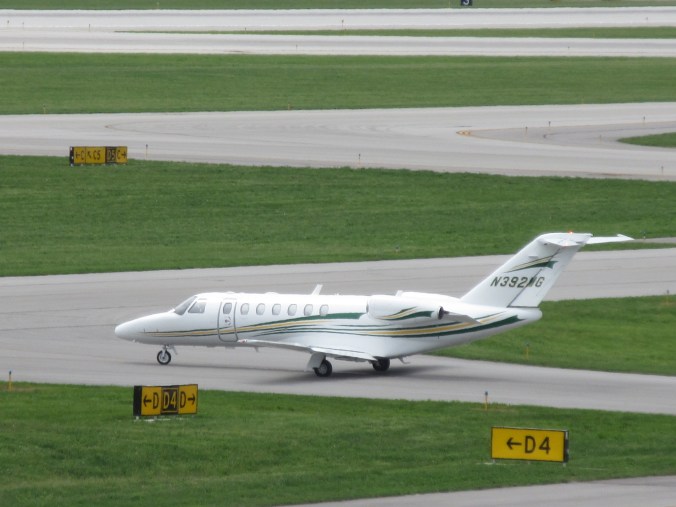
 I don’t care how much of a grind my job gets to be, I don’t see anything ever changing my love of airplanes. I’ve seen more planes take off, land and taxi by the window than I can possibly count and I still get just as excited every time. Airplanes are never boring to me. Besides, I never know what might fly in. F-18s, T-38s, KC-135s, and AirForce 2 have all “dropped by” while I’ve been there. Plus I’ve seen some really cool business jets. And you never know what chartered airplane might be sitting on the ramp. There is always something new and interesting to see.
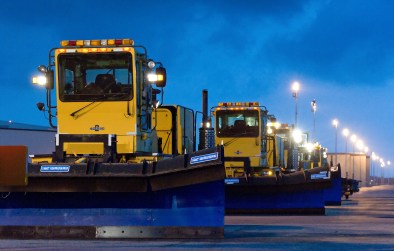
 Thought I might not like snowplows as much now that I’ve sat in one? Wrong!!! Sure, I sat in one, but not while it was snowing. Or on a runway. Or in a convoy. Or at night. I still love broom trucks too. And I still love deicing rigs. And ARFF equipment. And mobile conveyors. Basically, if it gets to go tooling around the airfield then I’m a fan. Well… OK, I’m not a fan of the honey wagons (aka lav trucks). Sorry, but I’ve gotta draw the line somewhere!
 Be honest – when I didn’t mention the mobile stairs in that last paragraph you thought maybe, just maybe, I’d gotten over my thing for stairs trucks. Nope! They are still my favorite piece of ground equipment! About a year ago someone with a sick sense of humor parked a set of motorized stairs outside my office where I would have to see it day after day. Can you believe it is STILL parked there – nearly a year later? That’s cruel and unusual punishment! I found out recently that the airport conducts auctions periodically to sell off assets that are no longer needed. I asked if we ever sell stairs trucks and I got a blank stare in return. I had to explain what a stairs truck is. Again. Clearly, I still have work to do!


 Tell us a little about your background as a pilot, how you got started, what you do now and where your travels typically take you.