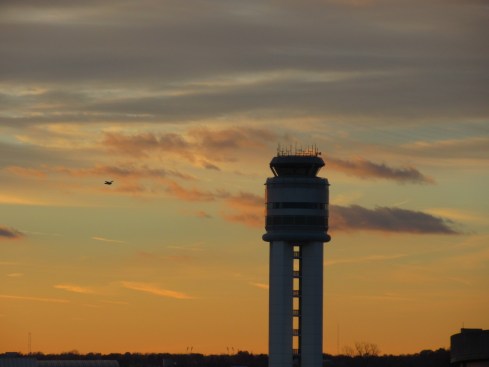
For as long as I can remember I have always dreamed of going up into an ATC tower. I park in the shadow of one every day and I often find myself gazing up at it and thinking about all the activity going on up there, not to mention the amazing view! So you can imagine my surprise and giddy delight when I got to visit not one but TWO ATC towers (at two different airports) in the last month.
Snow Tower
The passenger airport where I work has a lovely tower that was built just a few years ago. Wisely, they don’t allow me anywhere near it. Fortunately, the old tower still exists and is currently used in the winter for snow ops. As part of the deice pad control training I’m currently undergoing, I was given the opportunity to visit the tower to get a better view of the deicing area. Getting into the tower involves either riding up in the world’s tiniest elevator, or walking up roughly a million stairs. I chose the elevator. When the doors opened, the view that awaited me was worth every claustrophobic moment.
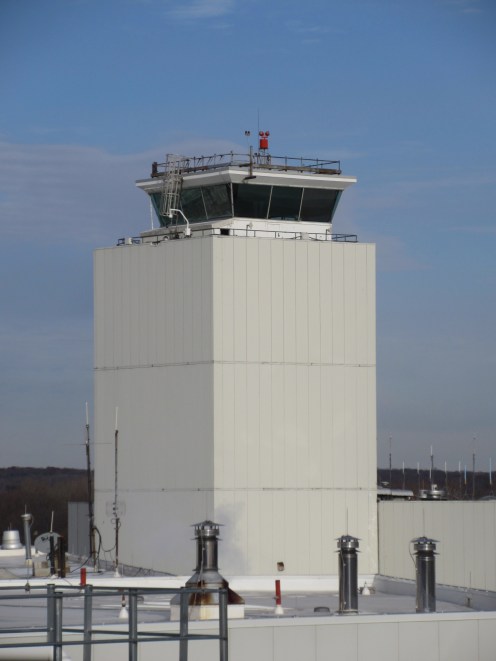
Old tower at the pax airport, now the snow tower.
My first thought was that I am moving my desk to the tower ASAP, crazy tiny elevator be damned! Being able to see pretty much the entire airport was simply spectacular. But then it was pointed out to me that there is no longer any AC in the tower which makes it unbearable in the summer. Neither is there any heat. The snow team uses portable heaters to stay warm during snow events.

New tower at the pax airport.
Once I was able to tear myself away from the amazing view out the window I was struck by size of the cab. It wasn’t tiny but it didn’t feel as big as I had thought it would. I tried to visualize all the ATC equipment that would have been in there. I suspect it was a bit crowded. The snow team’s equipment consists of some hand-held radios and a couple of laptops. There’s more than enough room for that as well as every single item currently crammed into my cubicle.
The Cargo Tower

Old tower at the cargo airport, now gone.
As excited as I was about visiting the snow tower, I was completely beside myself when I found out my department would be getting a tour of the brand-new ATC tower at the cargo airport. Construction was completed this past spring. The old tower had been built in the 50s when the cargo airport was still an Air Force Base. There was no elevator. To get to the top controllers had to climb stairs most of the way, and then climb ladders the final two floors. Once the new tower was ready it took 6 hours of cautious and steady work to transition over.
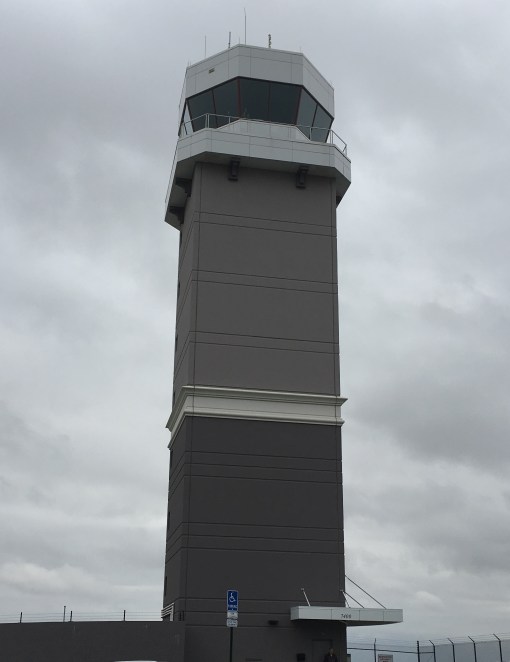
New tower at the cargo airport.
We began our tour on the 5th floor in the snow ops room. In the same way that Ops uses the Snow Tower at the pax airport, they will use this room to coordinate activities during snow events. The view is pretty spectacular but not nearly as awesome as our next stop – the top!
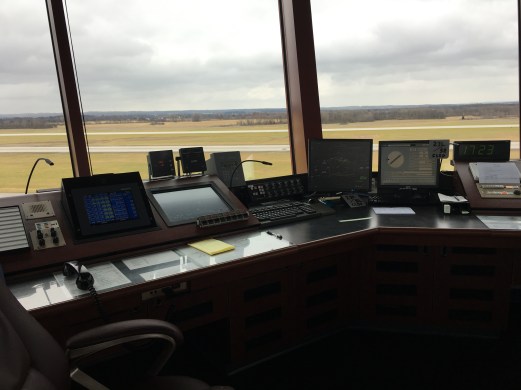
We were greeted by the two controllers on duty. They are both contractors – one a retired Marine, the other retired FAA. They explained the basics about what they do and showed us some of the equipment – the radar, the AWOS display, the flight strips, etc. They talked about what it was like working in the old tower and how they assisted in the set-up of the new tower.

KC-135s for the Air National Guard parked behind a UPS cargo plane.
Then they answered questions. I asked about approach control – I suspected that it is located at the pax airport and I was right. I asked about the airspace – the pax airport is Class C. The cargo airport, however, is Class D (as are the other two airports in the area, including our GA airport). I asked about what kind of traffic they typically handle. Obviously there are lots of cargo planes flying in, but I found out that on nice days they see a lot of GA planes as well. Apparently the two 12,000 foot runways are great places to practice touch-and-goes.

After answering questions the controllers asked if we’d like to go out on the catwalk that surrounds the cab. Would I? Oh hell YES! Coolest walk-around EVER! Thanks to low cloud cover and the fact that most cargo activity happens at night, there were no planes in the pattern while I was out there. That’s probably a good thing. If there had been they’d have had one heck of a hard time getting me back inside.

Eventually I did (reluctantly) go back in. We spent a few more minutes chatting with the controllers. It turns out the one who is retired from the FAA used to work at the pax airport. He started in the old tower (the snow tower) then moved to the new one. This means he has worked at all four towers at both airports. To my surprise, he spoke quite fondly of the snow tower. He said that the new tower is nice, but it’s somewhat sterile. The old tower felt more comfortable. I completely agree. And I’m still thinking about relocating my desk in there. Or maybe I’ll move to this cute little room at the cargo airport. The view is still great, the HVAC is better and the elevator is substantially less terrifying.

A bit cramped and a bit lower to the ground, but who cares. Still a great view!
 It’s not exactly a secret that I love airplanes and I’m fascinated with airport operations, so when I was offered the chance to help out with deicing this winter you can probably imagine my reaction. “Wait… I get to be on the airfield, in a Follow Me truck, surrounded by airplanes and deicing equipment? Oh. Heck. YES!”
 For the record, riding in a Follow Me truck is every bit as cool as I thought it would be. There’s nothing quite like looking out the back window and seeing the nose of a 737 RIGHT THERE. And in case you are wondering, deice trucks are just as fun to watch up close as they are from a distance. The airfield is especially lovely in the early morning. I never get tired of seeing airplanes silhouetted by the rising sun.
 Those of you who have been reading this blog for a while might be a bit concerned about my ability to concentrate in the face of so much avgeek awesomeness. Fear not! I’m honored to have been given this opportunity and I’m going to try to learn as much as I can so I’m able to help out as much as possible. Besides, even though it can be very busy, there are also quiet moments where I’m free to geek out over all the cool stuff going on around me.

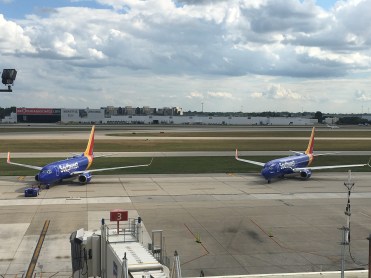 Here we see two Southwest airplanes doing their best to “stick the landing” in the synchronized push-back competition. What they are hoping you don’t notice is that one of them actually pushed back one minute before the other. So while they look beautifully synchronized at the moment, the truth is that they actually weren’t synchronized at all. Not even a little bit. As a result the judges had to deduct 9 points (from a 10 point scale). However, the planes were awarded one point each for actually departing on time.

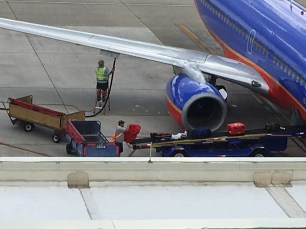 grabbing awkward, heavy pieces of luggage and tossing them onto the mobile conveyor. Points are awarded for actually getting them onto the conveyor. Bonus points are awarded if the bags survive the journey up the conveyor and actually make it into the airplane. Fail to make the conveyor too many times and hopes for winning this competition are dashed… along with every fragile item inside the suitcases.






 It’s
It’s 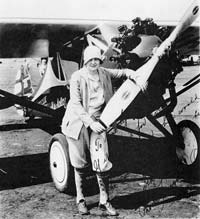 Phoebe Omlie was born in Iowa in 1902 and fell in love with aviation as a teen when she saw a fly-over to commemorate a visit from President Woodrow Wilson. She went on to get her pilot’s license and performed as a stunt pilot and wing walker. All of that is really awesome but then she did something which, in my opinion, makes her even more awesome still – in 1927 she became the first female to earn an airplane mechanic’s license!
 Ms. Todd was born in 1865 in Washington DC. As a girl she showed an affinity for mechanics and invention – interests she later attributed to her grandfather’s influence. In 1906 she designed a biplane based on the wings of an albatross, which she had been able to study at the natural history museum. She was eventually able to build the plane with funding from a benefactor and in 1910 it flew 20 feet. Are you kidding me with this? I can’t even build a decent paper airplane, let alone a functioning biplane. Ms. Todd ROCKS!
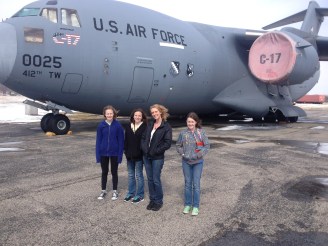
 Last year for Women of Aviation Worldwide Week I rounded up a bunch of teenage girls and dragged them off to an aviation museum. I was a bit uncertain about how the trip would go since none of the girls had expressed any interest in airplanes or aviation. As it turned out, everyone had a really great time. Here are some things that I learned:
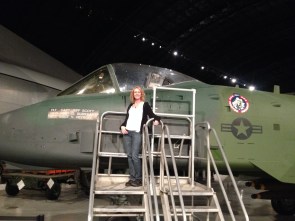 – Simulators are AWESOME.
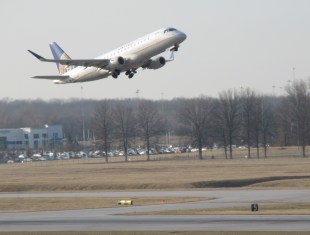 On the count of three I want you to name an aviation job. Ready? One… Two… Three! OK, hands up all of you who came up with one of the following: pilot, flight attendant, gate/ramp agent, airplane mechanic, air traffic controller. How many of you are thinking to yourselves that you’d really like to work in aviation, but those jobs just aren’t a good fit for you? Well I have some good news. You don’t have to be a pilot or a flight attendant or an air traffic controller to work in aviation. Want proof? Read on!
 My Journey
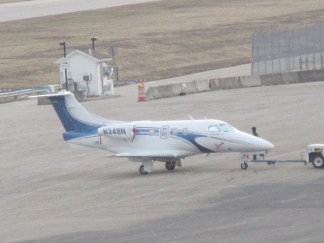 At the time I was working for a large Fortune 500 company and I although I liked my employer and didn’t mind my job, I really had no enthusiasm for the industry. I kept wishing I could work at something that actually interested me. Unsurprisingly, aviation kept coming to mind. At first I dismissed it – after all, I’m definitely NOT
  The Search
 It Takes All Kinds
 Pavement Specialist – In case you haven’t noticed, airports have a LOT of pavement. Someone has to know the best way to maintain it, how and when to replace it, etc.
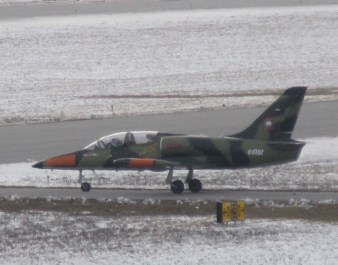 Airplane Watcher – Yes, you read that correctly! In the ops department at the passenger airport there is someone (or possibly several someones) who watch airplanes, sometimes live and sometimes on video. Large airports subscribe to tracking systems to monitor flights and eventually we probably will too. But for now, we use a more basic tracking system (think flightaware) and we like to confirm visually if we can. I am going to lobby to have that responsibility transferred to me ASAP! In the meantime, I console myself by remembering that those lucky airplane watchers almost certainly also have other, far less awesome tasks that they are also required to perform.
 So, Do You Want To Work In Aviation?

 Tell us a little about your background as a pilot, how you got started, what you do now and where your travels typically take you.






 Go ahead and admit it – you were just wondering what has been going on lately in the world of airports. Well today is your lucky day! Not only have I gathered up the latest airport news, but I also provide my (somewhat warped) take on it, free of charge! You’re welcome!


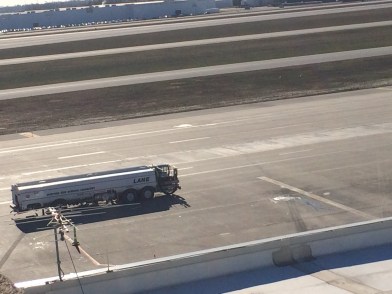
 I have mentioned in previous posts that it’s common to see ARFF (Airplane Rescue and Fire Fighting) out on the airfield. In fact, there are days when it seems like ARFF is EVERYWHERE. And no, it isn’t because they are protecting the mobile stairs from me. (The airport police handle that.) Although I’ve seen ARFF providing medical assistance inside the terminal, I’d never seen them assisting an airplane in trouble until recently. And then it happened twice in 24 hours!
 About a month ago I was enjoying my lunch break as I often do – plane spotting on top of the parking garage. I happened to see an airplane on approach to runway 28L. I looked down to fiddle with my camera when suddenly something didn’t sound right. I looked back up in time to see that the plane on approach had decided to abort and go around – right over my head!
 Much to my disappointment, my airport is not on LiveATC, nor do I have a functioning scanner so I am not able to listen to communications with the tower. Otherwise I would have had a better idea about what was going on. I decided to hang around a bit and wait for the plane to come back in and land. By now I had lost sight of it, but I figured it would likely try again on 28L so I walked over to that side of the garage and I waited. And waited. And waited. I’ve been watching airplanes come and go long enough now that I have a pretty good idea of how long it should take to get back on final. This seemed to be taking quite a bit longer than usual.
 Just as I was thinking I would have to give up because my lunch break was almost over, several ARFF vehicles came blasting out of their facility on the eastern edge of the airfield and took up positions along 28L. One fire truck was near the start of the runway, one was along taxiway C1 and another was along taxiway C3. Then there was an ambulance and a smaller ARFF vehicle waiting on the ramp.
 At long last the plane appeared once again on approach to 28L. It seemed to take forever before it finally got its wheels on the ground and then it made the shortest stop I have ever seen an airplane that size make. As soon as it got stopped the ARFF vehicles quickly surrounded it. I couldn’t tell from my vantage point exactly what they were doing, but the airplane sat on the runway for several minutes. Then finally it began to taxi down the runway, with the ARFF vehicles following behind. I
  expected it to turn towards the terminal and head to a gate to let the passengers off. Instead it went directly to a maintenance hangar. I realized then that the plane had been able to stop so quickly because it didn’t have any passengers or luggage on board. I never did find out what exactly happened with this airplane, or even whether it officially declared an emergency. However, given the ARFF response it seems likely that it did.
 The next morning I was chatting with a coworker when we heard sirens which grew louder and louder. Sure enough ARFF went blasting down the ramp and took up the EXACT same positions as they had the day before. My coworker is one of those lucky souls whose cubicle is along the windows, so she has a clear view of 10R-28L from her desk. Several of us crowded around to watch out the window. About that time the department manager appeared. He gets text messages whenever there are emergencies at the airport. He told us that the plane coming in had reported brake problems and a possible flat tire. He noted that if the landing went horribly wrong the plane could easily careen into our office. Then he wished us a nice day and left. (Have I mentioned that he has an incredibly dry sense of humor?)
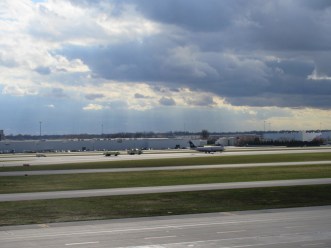 Undeterred we continued to watch out the window. As before, the plane landed and managed to stop very quickly. Not quite as fast as the plane from the previous afternoon, but still much more quickly than usual. Once again the plane was immediately surrounded by ARFF vehicles. Once again it sat on the runway for several minutes. This time, however, when it finally started to taxi it turned towards the terminal and headed for a gate with all the ARFF vehicles in tow.
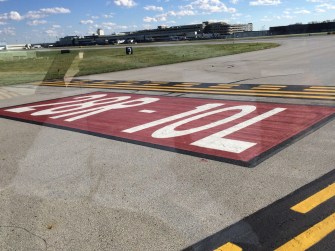 During both of these events planes continued to land as usual on the north runway, which allowed airport operations to continue without too much disruption. However, all that will change next spring when the north runway will be closed for 6 months for resurfacing. During that time we’ll be operating as a one-runway airport.
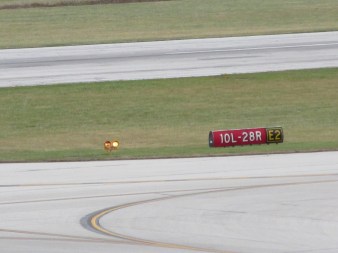 Even something as basic as airfield mowing has to be carefully scheduled. You can’t mow near an active runway, and if there is only one runway you can’t shut it down for mowing. So all mowing and regular maintenance activities will have to happen in the wee hours of the morning when there aren’t any regularly scheduled flights. Since it’s









 Tales from the Terminal