Regular readers may recall that earlier this year I set a goal for myself (and anyone else who wants to play along) of checking out at least 5 GA airports not previously visited. That’s right- it’s the 2019 Airport Challenge! Recently I took a step towards meeting that goal by spending a day at Grimes Field in Urbana, Ohio. This little airport has pretty much everything you could ask for: plenty of GA traffic, an excellent restaurant and not one but TWO aviation museums!
Along on the journey was my friend Jim Thompson, former stairs truck driver for a major airline (now retired) and current airport ambassador. We started our visit at the Grimes Flying Lab Museum. This museum is only open on Saturday mornings so I’m really glad we timed our trip to allow us to see it.


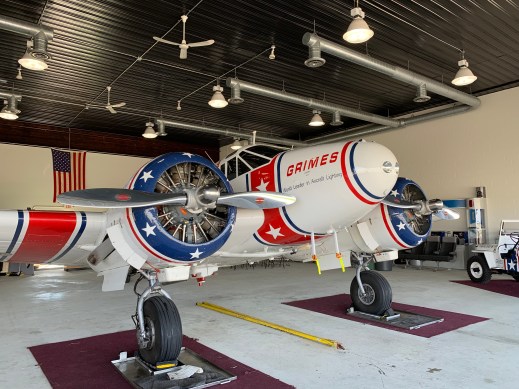
Housed in a single hangar, the exhibits are a showcase of the life and work of Warren Grimes, who founded an aircraft lighting company in the mid-1920s. The collection includes pretty much every type of lighting you can think of… and probably some you didn’t! The centerpiece of the collection is a C45-H which was used as a test bed and is decked out with so many lights it looks rather like a flying disco. It. Is. AWESOME!
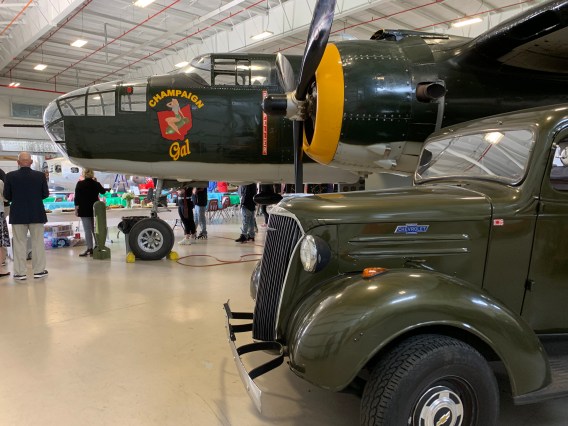
After an hour or so we made our way over to the other museum on the field – the Champaign Aviation Museum. The first thing I noticed when we walked in the door was a C-47 on display. These planes played an important role in WWII, particularly during the invasion of Normandy when more than 50,000 paratroopers jumped from them. With the 75th Anniversary of D-Day coming up in just a few weeks, I appreciated the chance to get an up close look at such an iconic airplane.

This particular warbird spent some time in the civilian world.
The next thing to catch my attention was the B-17 in pieces at the far side of the hangar. Named Champaign Lady, it is undergoing a ground-up restoration using various parts from other B-17s as well as some newly fabricated pieces. It was fascinating to see how it is being assembled. It’s even more impressive when you consider it is being constructed by volunteers! One of them spent some time talking with us about the challenges of tracking down parts and securing detailed plans for such an old plane. It is definitely a labor of love. I’m really looking forward to the day when she is ready to fly.


Also at the museum is my old friend the B-25 Champaign Gal. I’ve seen her at many aviation events and if you’ve checked out my “about the blogger” page, there’s a picture of the two of us together. There were quite a number of other exhibits related to World War II including uniforms, wedding dresses made from parachutes and many, many photographs.
My favorite exhibit, however, featured the Women Airforce Service Pilots, more commonly referred to as the WASPs. The museum has life-sized cut-outs of at least a dozen WASPs, each of which is holding a poster-sized information sheet which includes a photograph of themselves from WWII, their nickname, what planes they flew and an anecdote from their time in the service. Some of their tales are absolutely priceless! The exhibit brings the WASPs to life in a way that history books cannot. I found myself desperately wishing I could have met those ladies in person!


After we left the museum we did what any self-respecting avgeek does – we grabbed some lunch and hung around and watched airplanes! One of the best things about GA airports is how close you can get to the ramp areas. I was pleasantly surprised by the number and variety of planes that flew in while we were there.


So, what GA airfield have you visited recently? Need some suggestions of where to go? Check out eatattheairport.com! And if you are anywhere near Urbana, OH (or even if you aren’t) plan a visit to Grimes Field. Just make sure you get a piece of ridiculously delicious pie at the cafe – because the only thing better than spending a day with airplanes is spending a day with airplanes AND pie!
Want to learn more about the Champaign Aviation Museum? Check out episode 548 of the Airplane Geeks Podcast in which they interview Aimee Brower who handles public affairs, donor relations, and education.
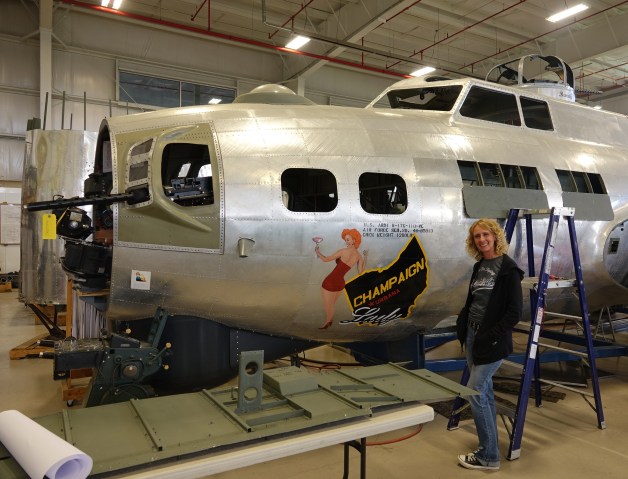
Photo by Jim Thompson
 Woah! 100 posts? Have I really written that many? Actually… now that I’ve added them up it turns out I’ve written 103 altogether! Apparently I sailed right by the big 100 milestone without even realizing it. Oops!
 Of course when I hit publish on that first post I had no idea whether anyone would actually read it. 100 posts later, I’m a bit shocked to discover I have readers from over 120 different countries. (Seriously? Wow!) As you might imagine, many come from places like the US, UK, Canada, Australia and France. However there are some readers from countries I didn’t expect, like Aruba (reading about stairs trucks on the beach, no doubt) and Nepal (probably learning about deicing whilst hiking the Himalayas).
 My most viewed post so far is: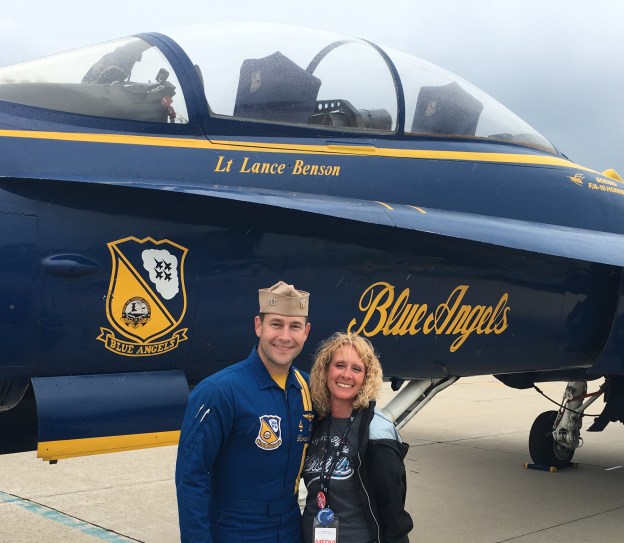

 According to a quick Google search, Pittsburgh International Airport saw around 9 million passengers in 2018. Chicago Midway had 22 million. Tampa had around 21 million. My airport saw just over 8 million passengers – the most ever. That’s great! Or is it? How does an airport know whether the number of passengers they are serving is good or not?
 I can’t speak to how other airports collect passenger data, but my airport does it via monthly reports that are submitted by the airlines. Each report includes the type of planes used, the number of landings for each, the number of passengers, etc. From that information we can determine the total number of seats and, in turn, calculate the load factors for each airline, as well as an average load factor for all flights during the month.
 Max effect

 In my part of the world, winter means lousy weather, cold temps and very little plane spotting. It also means I go through serious aviation withdrawals. Ugh! So how do I combat the winter doldrums? Aviation museums! They allow me to get my aviation fix and keep my camera from getting too dusty. Recently I got the opportunity to visit a museum I hadn’t been to before: the


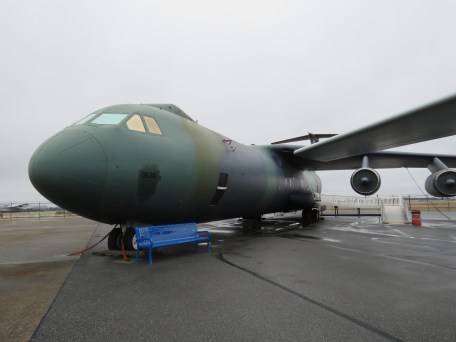

 One thing I learned early on at my job is that you don’t have to be an aviation enthusiast to work at an airport. In fact, most of the people I work with, while very talented and quite passionate about what they do, aren’t at all interested in airplanes. And that’s OK. But I know there have to be avgeeks hiding out somewhere – the challenge has been finding them.
 Over time I pretty much gave up on the idea of tracking down other airport avgeeks. But all that changed last summer in an unexpected way. Did I stumble across a magic device for detecting aviation lovers? Well… kind-of. And what, you ask, is the secret to unveiling hidden avgeeks? An A220 lanyard! Who’d have guessed!
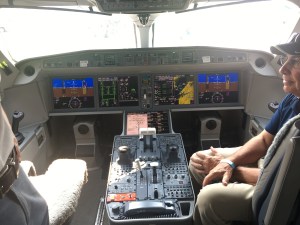 Have you seen the A220?
 Do You Work For Delta?
 A220, eh? My airline ordered a bunch of them but won’t be flying them.


 Then there’s the runways. At the passenger airport we have a very respectable set of parallel runways. Same at the cargo airport. They suit our needs quite adequately. But… well… they’re not very imaginative. Other airports have really upped their runway game. Take O’Hare for example. It has a variety of runway sizes and orientations. Or what about Boston Logan whose runways all seem to intersect with each other. I can only imagine how that went down:


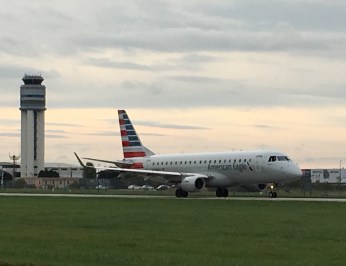 The dictionary defines an ambassador as, “a person who acts as a representative or a promoter of a specified activity or organization.” For me it simply means that when you really love something, you can’t help but share that passion with others. Recently I had the opportunity to share my love of aviation in some different and unexpected ways.
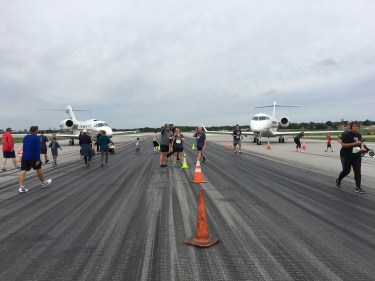 I wasn’t the only one enamoured with the airplanes. One of the race participants completely abandoned any pretense of running when she saw them. She pointed at the planes and said, “I’m not here for the race, I’m here for THIS!” The smile on her face made me realize that the airport 5K is so much more than just a race. It allows the community to connect with aviation and the airport in ways it wouldn’t otherwise be able to.
 There were three other people on the panel with me – an FO with a regional airline, a pilot with a private charter company, and a former airline pilot now flying business jets. We were asked to talk about our careers and we answered questions from the audience. I talked about my love of airports and how fortunate I am to work for one.
 Perhaps the most surprising outreach opportunity came as the result of a
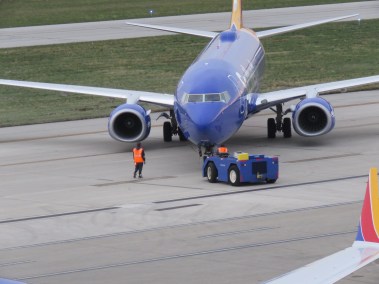
 I saw a video on twitter recently of a baggage handler behaving badly. The person who tweeted the video tagged the airport to complain. Other people chimed in as well, demanding that the airport take action. The problem is, baggage handlers are not actually airport employees. They work AT the airport but they don’t work FOR the airport. The media often makes the same mistake. More than once I’ve come across a headline proclaiming “Airport Employees Accused of…” only to learn that the people in question are employed by some other company that just happens to do business out of the airport.
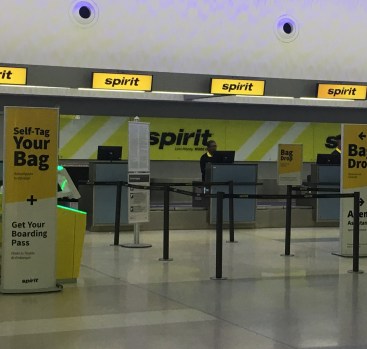 Ticket Counter and Gate Agents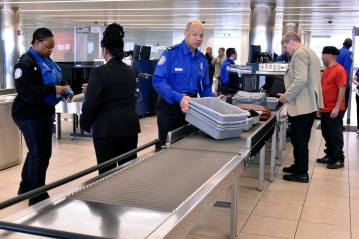
 Custodians and Building Maintenance:
 You may be wondering: don’t airports have ANY authority over the people who work there, even if they work for another company? Well… yes. Sort-of. The airport is responsible for issuing SIDA (Secure Identification Area) badges to anyone who works in secure areas, regardless of who their employer is. If someone violates SIDA rules then the airport can revoke their clearance, effectively preventing them from being able to work.
 I’ve got a thing for ATC towers. Who doesn’t, right? They’ve got the best view in the world! I’ve been staring longingly up at the tower at my airport since I started working there, wishing that I could get inside. I think they are aware of this because they keep adding more and more “no trespassing” signs along the fence.
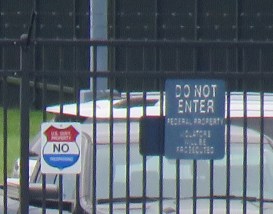 But… there’s still that tower at work. The one I park next to every day. The one whose controllers I listen to all the time. I’ve heard them handle emergencies and bad weather and single runway ops. Heck, I’ve even spoken to them when I helped on the deice pad. I feel like I know these people! I’m their biggest fan! And yet, this tower has remained out of reach…
 First stop was the cab. Wow. Just… wow! No other way to describe it! The view was spectacular. The planes look so small from up there! Getting to see the airport from that vantage point was both incredible and informative. For example, I learned that the tower does not have a good view of the deice pad because it is hidden by the terminal building. I didn’t realize that before.
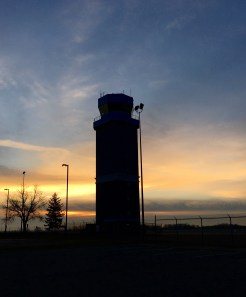 All too soon our cab visit ended and as you might expect, I REALLY didn’t want to leave. I was prepared with a whole list of reasons why they should let me stay:
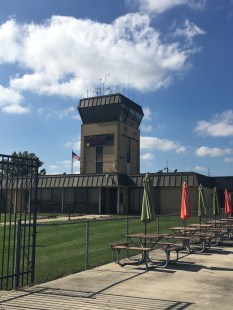 The first thing I noticed when I entered the room was that it is dark. Really dark. It took a minute for my eyes to adjust. When they did, I saw lots of computer stations. The controllers who work here not only handle approach and departure for my airport, but they handle all the traffic below 10,000 feet for most of the state. (There apparently used to be two TRACONS that got combined into one, which is why they cover so much territory.)
 There was definitely a different vibe in the TRACON vs. the cab. In the TRACON the focus is entirely on the computer screens. The controllers have a lot of airspace to manage and the atmosphere felt a little more intense. In the cab the focus is on the world outside the windows. The most important thing, however, is how it all fits together to keep things running smoothly and safely.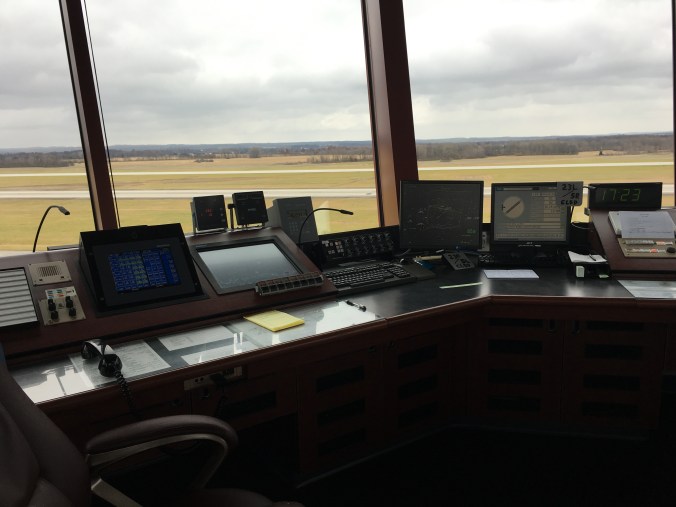
 Everyone knows how much I love airplanes. However, I’ve always liked classic cars too. A couple years ago I inherited a 1954 MG TF 1500 from my father. It’s not the kind of classic car I imagined I might have, but the more I’ve gotten to know it, the more I’ve come to love it. When I found out there was going to be a Cruise-In/Fly-In nearby I was super excited. Spend the day at an airport with airplanes AND classic cars? Oh heck yeah!
 The first thing I noticed when we arrived at the airport was all the cars – they had a great turn-out for the cruise-in! There were plenty of American classics, of course, but there were some imports as well, including another old MG. There were also a lot of airplanes. The fly-in covered just about every aspect of aviation you can think of. There were drones and RC planes. There were flight simulators. The NASA “Journey to Tomorrow” traveling exhibit was there along with a shuttle astronaut who was signing autographs. Several university aviation programs had booths set up. And of course they had rides – a helicopter, a bi-plane and a C-47 were all coming and going with passengers on board. However, I was most excited about the Ford Tri Motor.