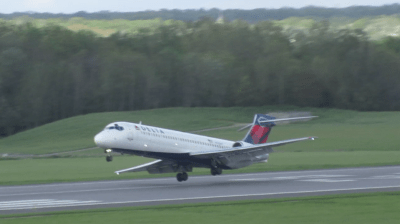
 It’s a sad truth and it pains me to say this but… plane spotters tell lies. Yes, we do. Anyone who says they don’t is… well, probably lying. We don’t mean to lie, it’s just that when you are hanging around the airfield and watching planes come and go, it is so easy to get completely sucked in and say things that you don’t really mean. For example:
I’m not going plane spotting today.
 Since I work for an airport, the temptation is always there to stop upstairs and do a little plane spotting before I head home. It seems that no matter how firm my resolve to go straight to my car after work, by the time I get to the escalators I feel that irresistible urge to head on up. At that point I move on to lie number two…
I’m only going to stay for ten minutes.
Half an hour later and I’m still there. The problem is, there’s almost always something interesting to see. In the unlikely event that there’s nothing happening on the airfield, I listen to ATC communications on my scanner. I listen to some of the airline operations frequencies as well, which can often be quite entertaining.
It’s too wet/cold/snowy/stormy for plane spotting.
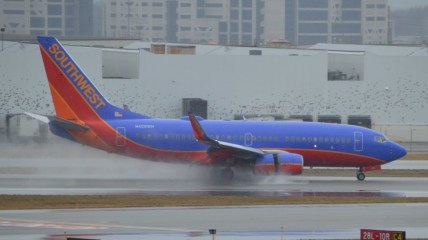
Photo by Andrew Stricker
To be fair, sometimes it really IS too miserable outside for plane spotting. But spotters learn quickly that airplanes can be very cool to watch in rainy/snowy/windy weather. Can you say crosswind landings? On a recent stormy Friday I was able to sneak outside for a few minutes between storms. Listening to the coordination between ATC and the pilots and watching flights navigate around the weather was quite fascinating.
I’ve already got several pictures of that airline/livery/aircraft type. I don’t need any more.
Except they’re landing from the opposite direction today… and on the other runway… and the sky is amazing… and the light conditions are just right…
I’m only going to wait a few more minutes for that flight to push back and then I’m giving up.
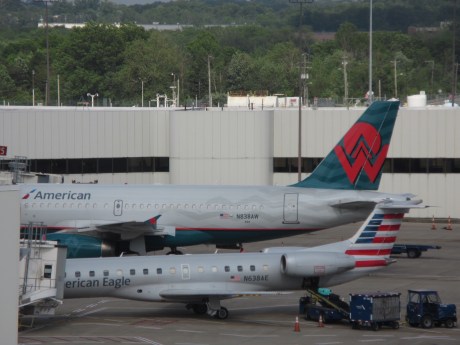
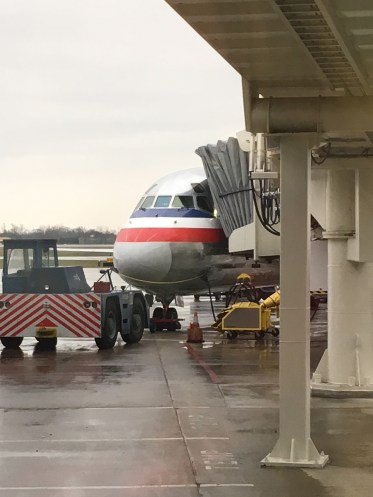
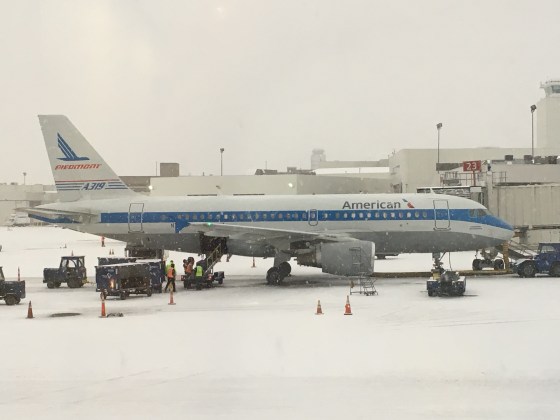
I have to thank my twitter friend Andrew for coming up with this one. It’s so true! An hour later I’m still there, still waiting for that plane to depart. Of course when I do give up and leave that’s when the plane decides to taxi out. Doh! I swear it does this on purpose just to taunt me! (I’m talking to you, American Airlines Airbus with the America West retro livery!)
I don’t need a better camera/lens/scanner.
Actually, yes I do! I really do! And once I get that new piece of spotting equipment, then of course I have to test it out! But don’t worry – I’m only going to stay ten minutes.
So why do we end up staying even though we swear we’re going to leave? Why do we make liars out of ourselves? Well…
For Moments Like This:
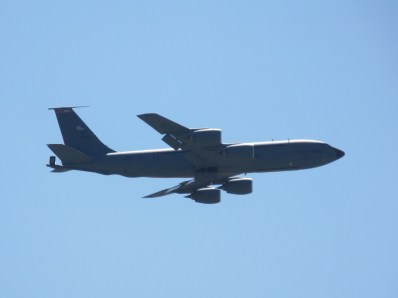 Earlier this week I decided to do a little plane spotting on my lunch break. It was hot and muggy so I told myself I’d only stay a few minutes. I was just about to (for once) head inside early when I heard a military flight contact the tower. I didn’t recognize the call sign but assumed it was probably a KC-135 practicing approaches. They often fly over from the nearby Air National Guard base. I’ve seen them several times before, however I figured I might as well stick around and watch them fly by.
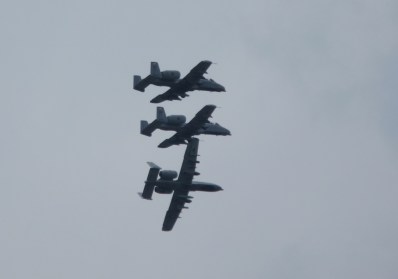 Then I heard ATC clear the flight for the break. At that point I realized that it couldn’t be a tanker – it had to be fighters. Before I could even begin to speculate on what kind of fighters they might be, a flight of four A-10 Warthogs appeared. I calmly and patiently watched as they circled to land… OK, I’m lying again. The truth is, I completely lost my mind. I let out a shriek and sprinted across the parking garage (in high heels no less) while simultaneously attempting to take as many pictures as possible. I was overwhelmed with excitement, laughing, crying, jumping up and down…
 Then I noticed that the group of construction workers who had been working nearby were slowly backing away. I must have looked like a complete lunatic. And guess what? I. DON’T. CARE. If you’ve been reading this blog for any length of time then you know the A-10 is one of my all-time favorite airplanes. I’ve only seen them fly once before at AirVenture Oshkosh last summer. To see them at my airport was absolutely the most unexpected, amazing thing EVER.
So why do plane spotters tell themselves these terrible lies? Because magic moments happen without notice when you least expect them. We just don’t want to miss out. And that’s the truth.

Author’s note: In April I attended an event at the USAF Museum commemorating the 75th anniversary of the Doolittle Raid. If you want to hear about it and see some pictures I took of the B-25s that participated in the flyover, please check out Episode 24 of the Flying and Life podcast.

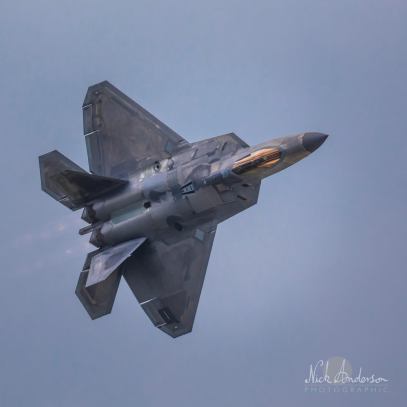

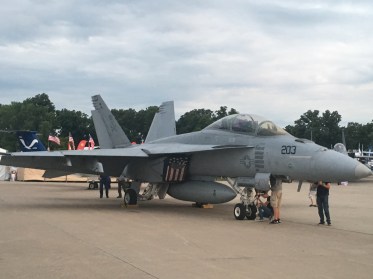
 Awesome: The F-18 Super Hornet
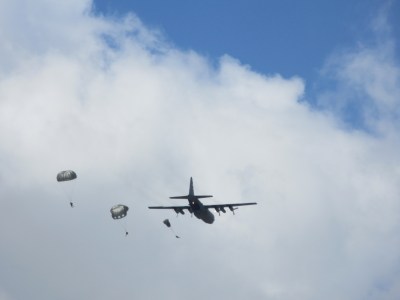 Awesome: C-130s and paratroopers
 Awesome: All the amazing airplanes on display.
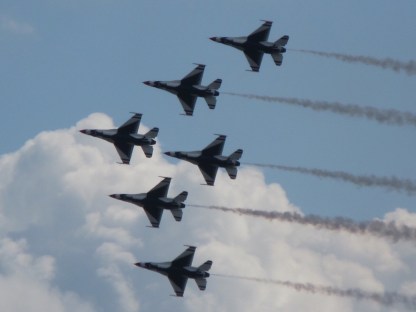 Even More Awesome: Wandering through the displays with an aviation historian.
 There has been a lot of bad press for the airlines lately. It upsets me because I know that the people involved in these incidents are NOT representative of the vast majority of airline employees. I see crews and gate agents and ground handlers every day. I see them showing up to work at crazy early hours. I see them still working late at night. And even when the day has been stressful with bad weather and canceled flights, they still manage to laugh when I see them on the shuttle at the end of the day.
 So this is for you, pilots and cabin crews. I see you in the parking lot heading to the terminal. Most of you are commuting to your bases for the start of your trips. I often wonder just how far you have to go before your working day begins. And let’s face it, in a lot of ways once the uniform is on, you ARE working. I see passengers asking you questions and looking to you for guidance, even though at this point you’re technically just a passenger too.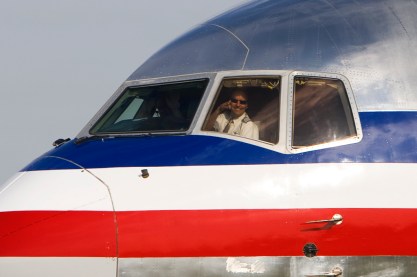
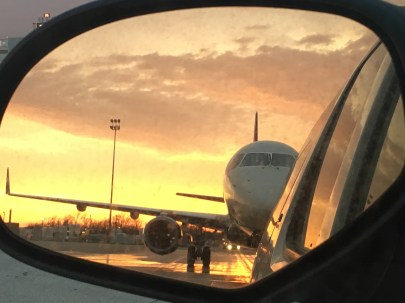 As those of you who have been regular readers know, this past winter I was given the opportunity to train with the Operations Department to learn how to manage the deice pad. To recap, deice pad management involves being on the deice pad in an operations vehicle and providing taxi instructions over the radio to position planes in the pad. We sometimes also act as a follow-me vehicle and lead planes into the pad. Once in position, the planes are handed off to their deice teams for the actual deicing.
 The lesson began casually enough when my trainer asked, “Do you want to drive?” My out-loud response was a calm, casual, “Sure.” However, as I took the keys to the SUV my internal response was, “OH MY GOD I AM GOING TO ACTUALLY DRIVE AROUND ON THE AIRFIELD WHICH IS COMPLETELY RIDICULOUS AND TOTALLY AWESOME AND IT IS TAKING EVERY OUNCE OF WILLPOWER NOT TO FREAK OUT!”
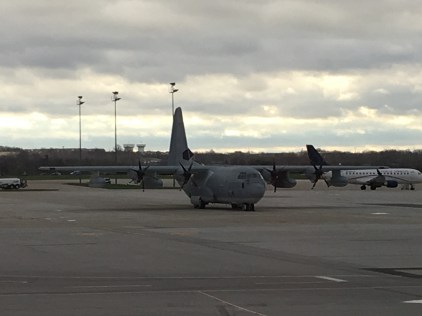 He then went over some of the many markings on the ramp and what they mean. The yellow lines bordered in black are the aircraft taxi lines. He told me not to follow them because they would lead me to places I shouldn’t be. Like active runways. Yikes! He had me drive straight out towards one of the taxiways which, I must admit, was a little disconcerting. Hello – aren’t we supposed to be avoiding airplanes? However, before we actually got to the taxiway he had me stop and he pointed out markers on the pavement. He explained that this is as far as we are allowed to go. We cannot cross that line without clearance from ATC. OK – good to know!
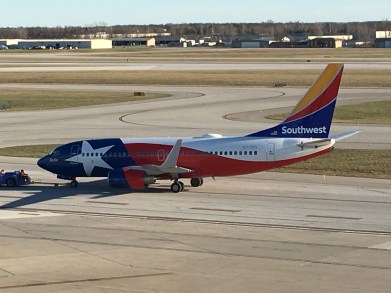
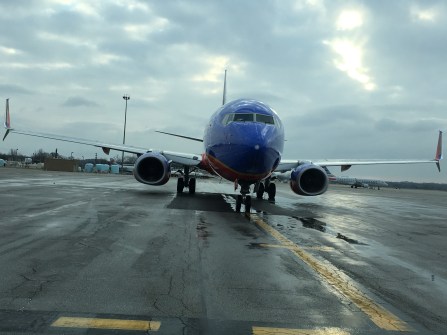 I then spent time getting familiar with the drive lanes and where the deice lines are, as well as the best places to sit with good line-of-sight for monitoring activity on the pad. And did I mention we were directing planes this whole time? Well actually, my trainer was. I figured since it was my first time behind the wheel, I should focus on driving. Once the basic instruction was completed I was on my own to decide where to go and when. Sometimes I parked along the back of the pad. Sometimes I sat on a line just in front of the t-stops to be a visual reference for pilots so they could see where to position. An added benefit of this is it gives you some really awesome photo opportunities. Which my trainer got to enjoy because I was driving. Doh! At one point we paused to take a pic of a Southwest plane, only to realize that someone on the plane was taking pictures of us!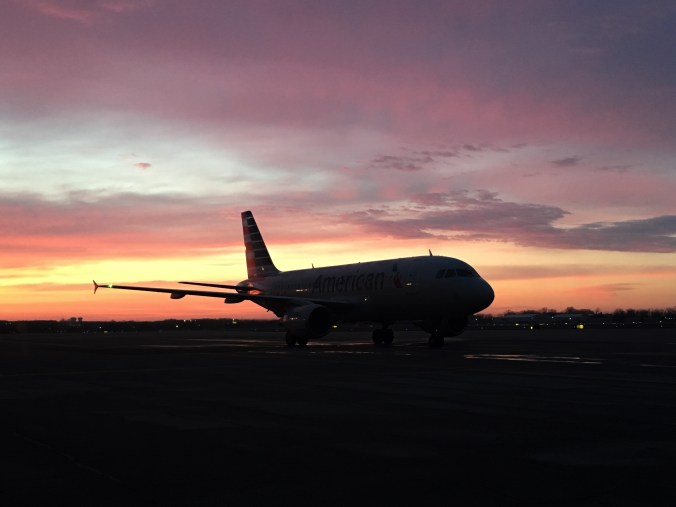
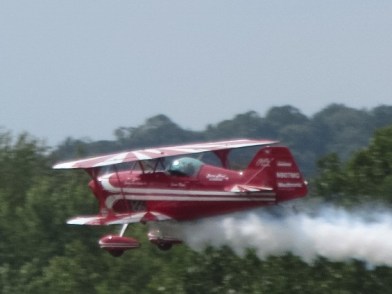 It may not feel like it yet, but the calendar says that spring has arrived. You know what that means? Yes, warmer temperatures and pretty flowers are coming. But more importantly, air show season is just around the corner! Hooray! I cannot wait! I’m planning to attend two big events this year.


 The Plane Next Door
 For two years now I’ve been watching it through the window. I’ve watched countless numbers of bags loaded and unloaded and countless numbers of meals delivered. I’ve watched mechanics tinkering with the engines. And I watched when an MD-80 brought a fallen soldier home last year. The Mad Dog has been a central part of my airport experience in so many ways. So you can imagine my reaction when I was given the opportunity recently to tag along on a pre-flight walk-around. Are you kidding me? Oh. Heck. YES! (Have I mentioned lately how much I love working for an airport?)
 Up Close and Personal
 tried really hard not to ask too many questions. (What does this button do? What about this one? And this one?) Trust me, it wasn’t easy! However, I was very aware that the crew was preparing for a flight and I didn’t want to be in the way. All too soon it was time to go. I walked back up the jet bridge with a whole new understanding of the MD-80. And I love it even more than I did before!
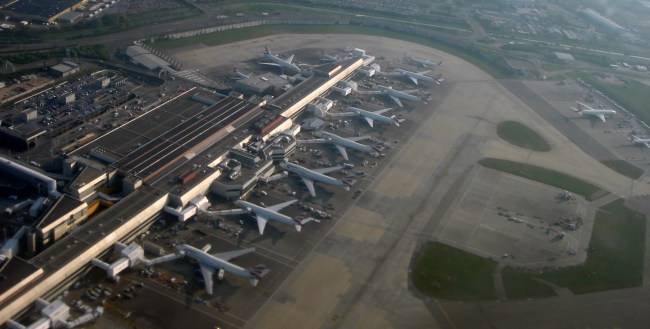
 The sad truth is, it could happen anywhere. Check out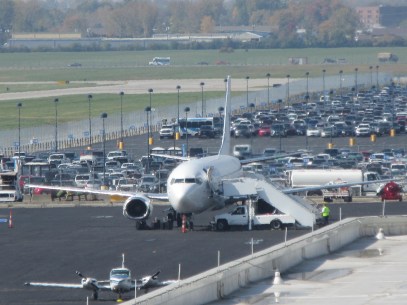
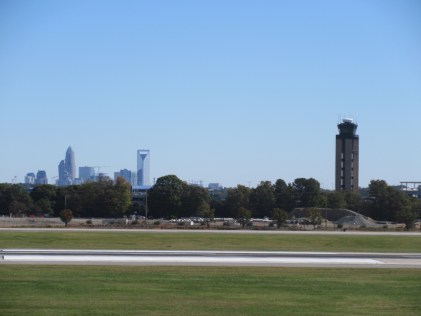 The only airport I have visited with an official viewing area is CLT. It is perched on a hillside overlooking the center runway and it is one heck of a busy place! When I was there the benches were almost always filled with people of all ages. Not only do they get to watch airplanes take-off and land, but they get a chance to see what goes on behind all those tall fences.
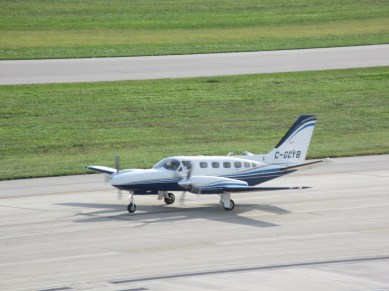 I realize that creating public viewing spaces or organizing community events isn’t easy. Airports are tasked with the very important responsibility of ensuring the safety of travelers. This can be extremely challenging. Additionally, space at airports is often at a premium. It can be difficult to find room for viewing areas or playgrounds. But I think the potential reward is worth the hassle.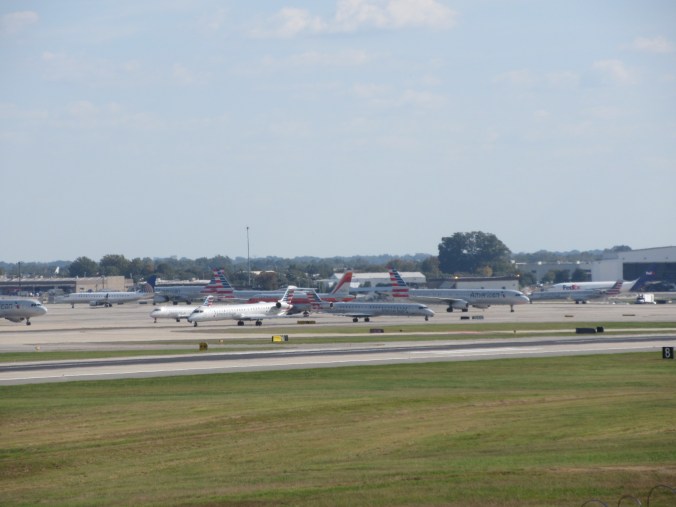
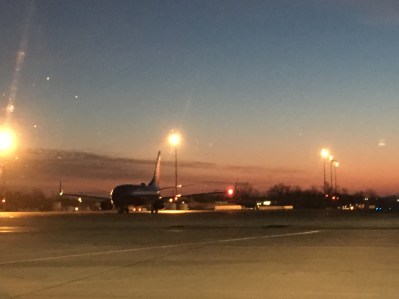
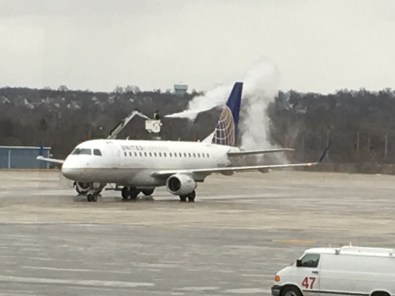 As you may recall, I have been training to help the Ops Department manage the deice pad on frosty mornings. This process involves driving around in an ops vehicle, giving taxi instructions on the radio, keeping a log of all the traffic through the deice pad and acting as a follow-me when needed. If that sounds like a lot to learn, it is! At this point I’ve gotten pretty good at telling the different RJs apart, I’ve memorized the call signs and ICAO codes for each airline and I can successfully manage the log. I’ve ridden along and watched the deice pad management process enough times now that I have a decent understanding of how it works. So what’s the next step? Talking on the radio.
 Say What???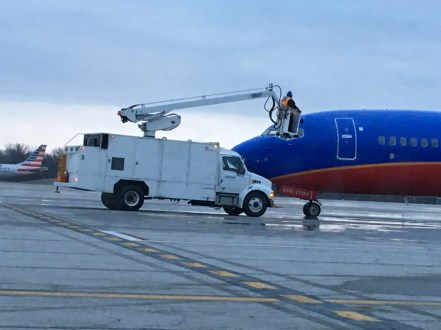


 As you probably know by now, I’m a big fan of aviation museums. One of my favorites is the
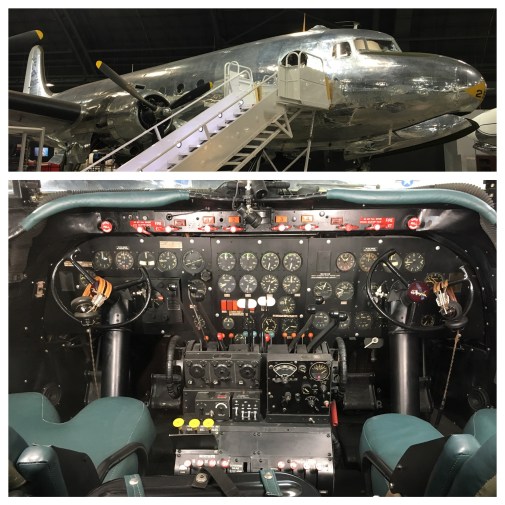
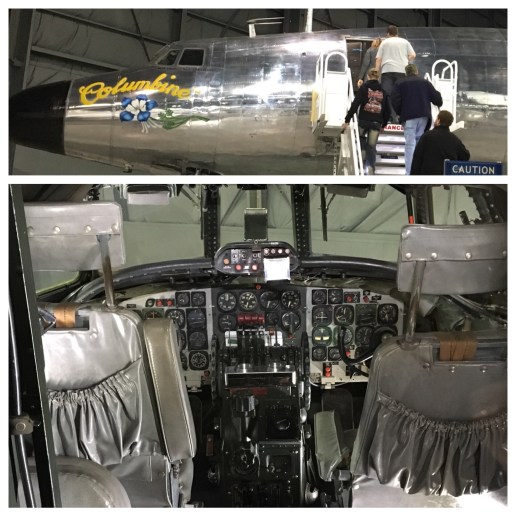
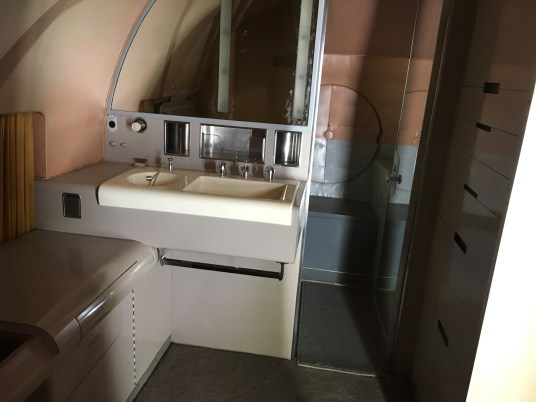
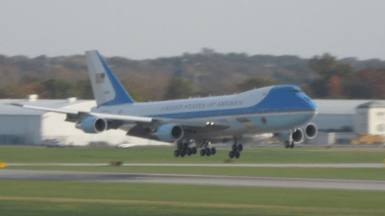 When you think of Presidential Airplanes, the first thing that probably comes to mind is the current Air Force One – a Boeing 747. I’ve had the fortune of seeing it a couple of times recently. However, there have been a number of different planes used to transport the President over the years, and the USAF Museum has several of them including the Lockheed VC-121E, the Douglas VC-118 and the Douglas VC-54C. Perhaps the most well-known plane in the collection is the Boeing VC-137C that flew 8 Presidents – Kennedy through Clinton.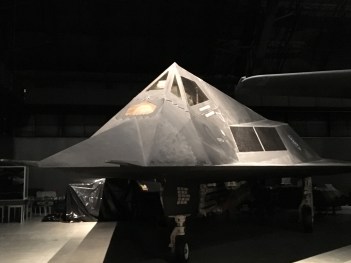







 Tales from the Terminal