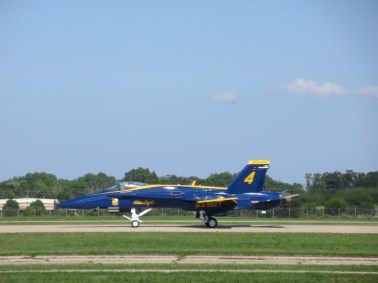
I hate this time of year. I work long hours and it’s a struggle to get away from my desk. When I do get a moment free it is either too wet, too cold or too dark to go outside. Just the other day an Osprey flew in and all I could do was watch sadly through the office window. This is so not OK! Maybe the lack of airfield action is why I’m a little obsessed with winter operations. OK, actually, I’m a lot obsessed. But let’s face it – no other season allows me to get my fix of airplanes and big, awesome ground support vehicles all at the same time!
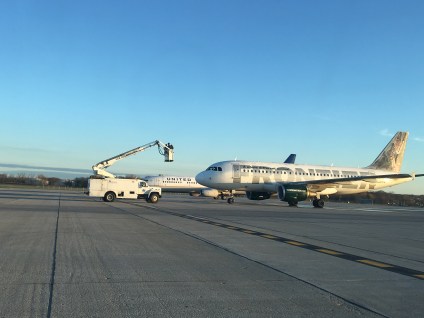 If you have been reading this blog for awhile then you know that last year I got the opportunity to help the Ops department manage the flow of traffic into and out of the deice pad. There was a lot to learn and it was kind-of stressful, but it was also incredibly cool. Unfortunately I’ve been unable to help out this year and I miss it SO MUCH! Wait… did I just admit that I miss being at the airport at 5am in freezing weather? Yes, I did. I know it sounds crazy, but I really enjoyed making a hands-on contribution to keeping the airport up and running.
 Preparation for the winter season actually begins in August. That’s when the airport starts stocking up on the chemicals and other supplies needed to aid in snow removal. In early fall we start hiring winter seasonal employees and the Airfield department recruits for additional snow warriors from among the other departments. I know what you’re thinking. If they allow other airport employees to help out in the winter, why on earth have I not jumped all over this opportunity? Please refer back to paragraph number one. Sadly, winter is the busiest time of year in accounting and it just isn’t possible to take on anything else.
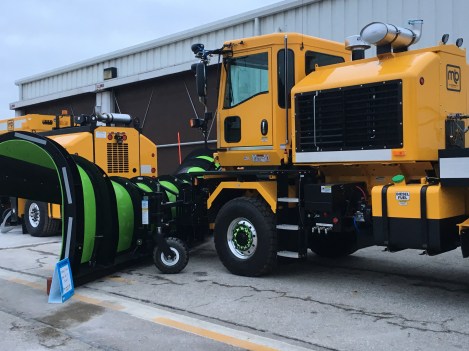
 This year we added serious muscle to our snow removal capabilities with the purchase of six multi-function machines. These ginormous vehicles have a plow on one end and a broom on the other. They are capable of moving huge amounts of snow in a fairly short amount of time. When it comes to ground support vehicles, these are the biggest and baddest of the bunch. Only the full-time airfield employees are allowed to drive them – no seasonals or helpers from other departments. Not surprising when you consider they cost three quarters of a million dollars each!
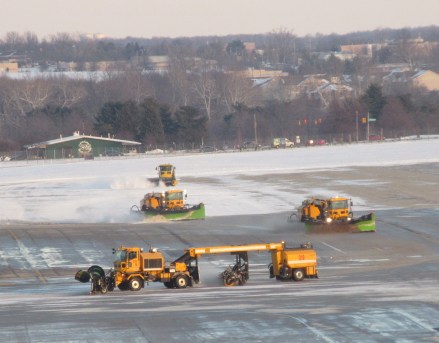 Once the snow starts falling, keeping the airport open is a collaborative effort between Operations, Airfield Maintenance and ATC. One of these days I hope to score a ride along so I can get a first-hand look at the process. But for now I do what so many other avgeeks do – I bring up Flight Radar 24 and tune in to the tower on Live ATC. Listening in on winter operations at any airport can be fascinating. However, when it’s my airport it becomes quite personal. I know the people who are out there working, and when the weather conditions are bad I know what they are up against.
 Our most recent big storm was quite a challenge. It started with temps well above freezing and torrential rain. These conditions can make it hard to pre-treat the runways to get ahead of the frozen participation to come. The temps fell through-out the day hovering at the freezing mark for a few hours and coating everything in ice. As the temps continued to plummet the ice turned to snow and the winds began to pick up.
Our runways have an east-west orientation. During this storm the wind was from the north gusting up to 32kts. Keeping the runways and taxiways plowed in these conditions is incredibly difficult to say the least. The crosswinds, in combination with snowy runways (rated at 3/3/3 on the RCAM scale), proved to be too much for most flights. For a good two hours I watched as every single plane had to divert. Ouch! This is never what any airport or airline wants. However, sometimes there’s just no winning against Mother Nature.
 I was surprised at first to hear the deice pad frequency up and running so late at night. Under normal winter conditions – a frosty day or light snow – Ops will run the deice pad only during busy departure times. Otherwise the ramp remains uncontrolled and pilots work directly with the ground crews to get positioned for deicing. However, I found out that any time the airport is in snow operations, the Ops Department will take charge of the deice pad. This way they can keep the parking lines clear of snow, improve traffic flow and minimize the risk of collisions. Plus it allows them to relieve some of the burden on ATC since Ops will take over issuing some of the taxi instructions.
During a storm the snow removal teams focus on the runways and the main taxiways. It can take several days after the snow stops falling to clear the rest of the paved surfaces. (Airports have A LOT of paved surfaces!) Fortunately we’re in the midst of a mid-January thaw so the temps have warmed up, the snow has melted and the snow warriors are getting a much-needed rest. However, I have a feeling winter isn’t done with us yet. The snow will return, and when it does you know I’ll be watching!


 So how do you top off a week that had such a stunning beginning? Why with a visit to the FBO, of course! At the cargo airport the FBO is run by the Authority so we are very involved with paying their bills and invoicing the airlines for their services. Getting to spend a few hours there was an important learning experience. And, of course, the avgeek in me was a kid in a candy store.


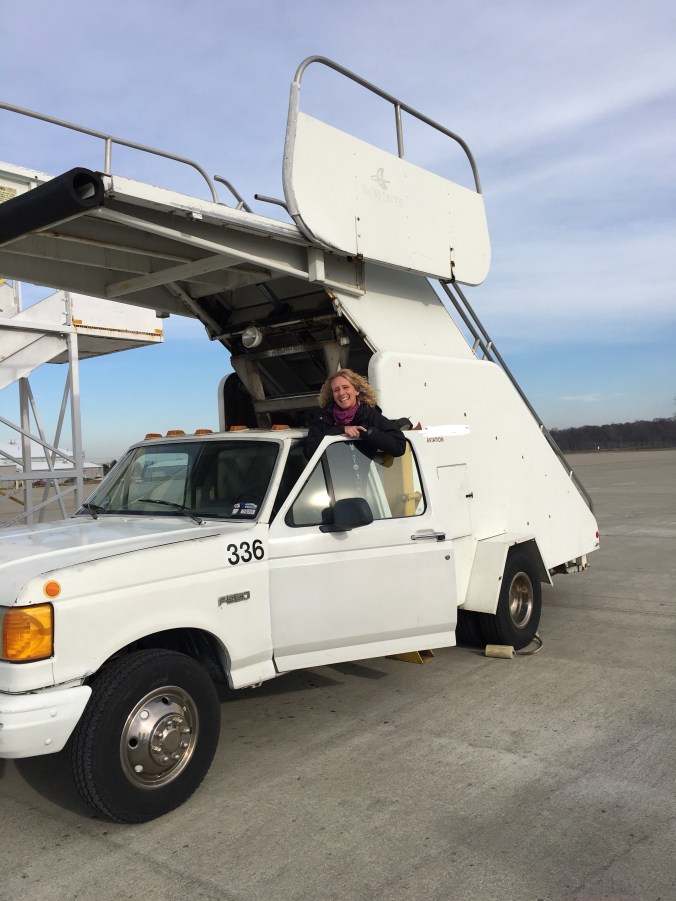
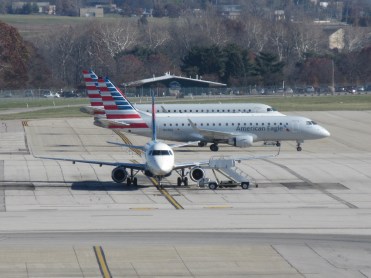 Can you believe I’ve been working at the airport three years now? Three years! Three years of stalking airplanes. Three years of fighting the urge to ride around on the baggage carousel. And three years of being taunted by several sets of mobile stairs which have been parked outside the department window the ENTIRE time!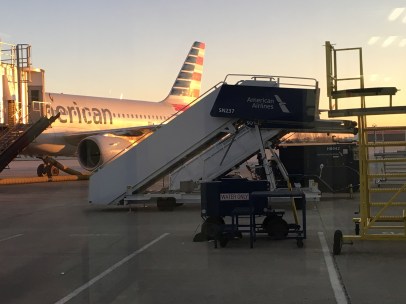
 But work has become a bit challenging in recent months. There have been some changes which have resulted in an increased workload, just as we head into the busiest time of year. Change isn’t a bad thing, but it can be stressful. And as the amount of work increases, the stress does too.
 Then my plane spotting began to suffer. I found myself unable to get away from my desk, even skipping lunch sometimes. After work I was tired and just wanted to get home. It came to a head one day when a plane spotter friend texted me that there were two C-130s on the airfield. Two C-130s! Sweet! I really wanted to go see them, but my task list was a mile long and felt like I just didn’t have the time.
 At that moment it hit me. The whole reason I work for an airport is because there are airplanes outside the window. Am I really going to turn down the chance to go see a couple of C-130? Oh. Hell. NO! So I threw on a jacket and up top I went. I saw the Hercs and they were every bit as fantastic as I knew they would be. I thought about all the other amazing planes I have seen this year and I vowed right then and there not to let the work ruin the love. No matter how stressed or busy I am, I will ALWAYS make time for the airplanes. And you know what? Spending my 30 minute lunch break away from my desk doing something I enjoy makes me so much happier and more productive when I get back. The truth is, being stressed at work at an airport is a THOUSAND times better than being stressed at any other job.
 So what’s ahead for the next year? Well, I have an FBO visit coming up. And I’m hearing rumors that we might be visiting the ATC tower in the spring. Plus I’m already dreaming about a return trip to Oshkosh. Who knows what other adventures will come my way. If there is one thing I’ve learned in the last three years, it’s that sometimes the best moments happen totally unexpectedly, and sometimes the ordinary things are the most special.
 For people living in the United States, late November kicks off one of the busiest travel seasons of the year. Over 28 million people are expected to take to the skies over the Thanksgiving holiday alone. Travelers are counting on the airlines to get them safely to their destinations. What they may not know, however, is that there are a whole host of airport personnel working behind the scenes to keep things running smoothly.
 Building Maintenance
 Airfield Maintenance

 It may come as a surprise to learn that I haven’t flown commercially in nearly a decade. However, many years ago I worked for a company that required me to travel several times each year. During that time I had a couple of wacky adventures that I look back on with amusement.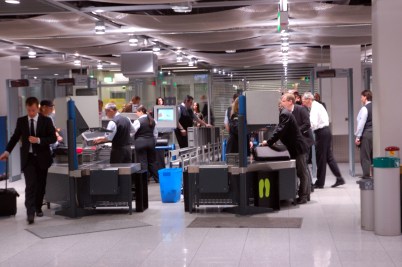
 Once in the car I looked at Jay.
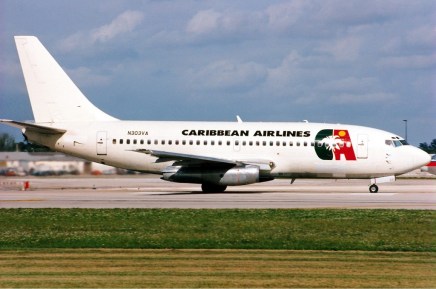







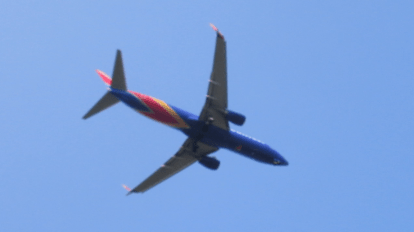 I realized something wasn’t right when I saw the Southwest Boeing 737 flying low and slow over my neighborhood. It was much lower than it should have been. Plus it was coming from the wrong direction, completely outside the normal approach and departure patterns.
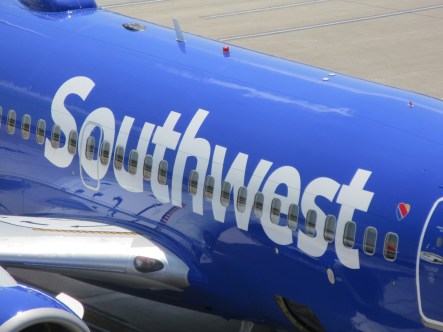 Hoping to pick up some information from ATC communications, I listened intently to LiveATC while my brain went over a list of potential scenarios. Bird strike? Flap issue? Gear or tire problem? Then I heard one of the Southwest pilots come on the radio and use a word that caught my immediate attention: emergency. I have listened to a lot of ATC communications over the years, but this was the first time I have ever heard that word used concerning a flight from my airport.
 At this point I had a decision to make. Should I drive the 15 miles to the airport to watch the flight come back in? I was tempted. But I was afraid that while I was driving I might miss out on important communications or other developments. I consoled myself with the fact that when the plane made the western arc of its holding pattern I could see it from my back yard. Granted, I had to stand on the patio table. On my tiptoes. Doesn’t everyone watch airplanes that way? Actually… don’t answer that.
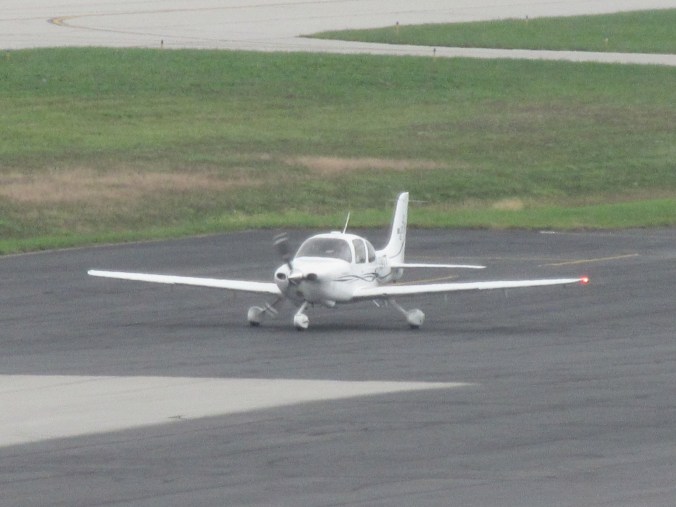
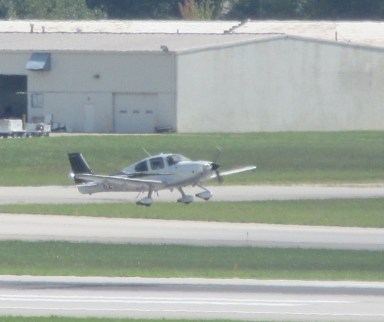 During the time that the Southwest flight was holding, ATC had allowed other planes to take off and land. However, when the pilot of the Cirrus called in, the Southwest flight had just left the hold and was preparing to do a final low approach before landing. As a result, ATC had stopped departures and was clearing traffic from the area around the airport. This presented something of a problem for the emergency Cirrus, who had requested immediate clearance to land.
 Fortunately, we have a large cargo airport located just a few miles to the south of the passenger airport. ATC recommended landing there and the Cirrus pilot agreed. ATC then proceeded to give him vectors to the airport. The Cirrus landed without incident. Shortly afterwards, the Southwest flight completed its final low approach and circled around to a safe landing. They were even able to taxi to the gate with no issues.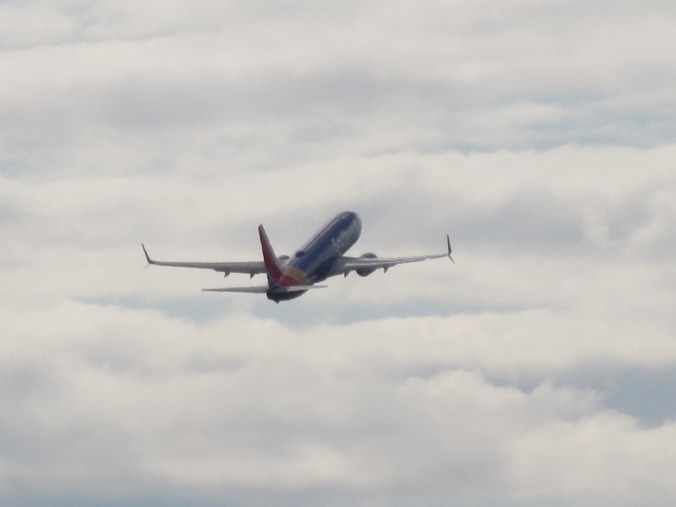
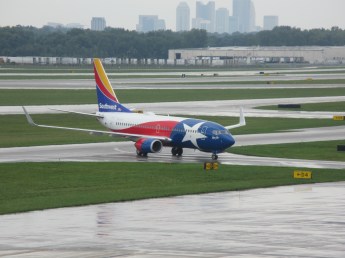 Every aviation enthusiast has a list of airplanes that they really want to see. Sometimes it’s a certain type that we’re after. Or it can be a particular airline or livery (or both). Some hard-core spotters seek specific tail numbers. For me, it is a mix of these things.
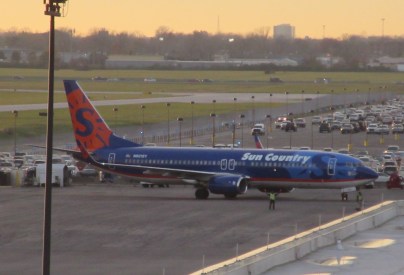
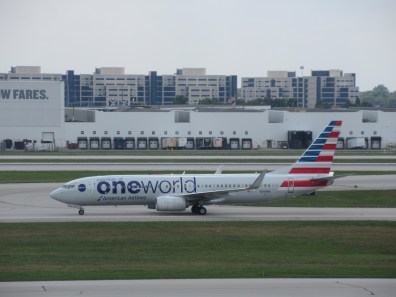 With all the hours I spend at airports, you’d think that chasing down specific liveries wouldn’t be much of a challenge. Wrong! For one thing, I’ve got pretty strict rules. I have to see the plane where I work – another airport doesn’t count. The plane needs to be taxiing, taking off or landing, and I need to witness it either from the ramp or up on the garage. The bigger issue, however, is that certain airplanes are deliberately hiding from me.
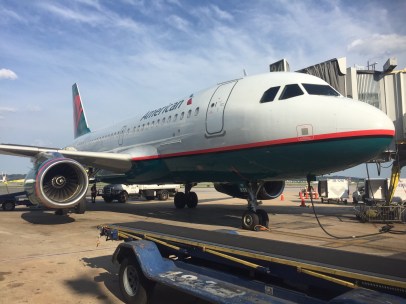

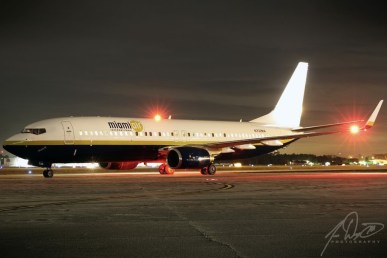

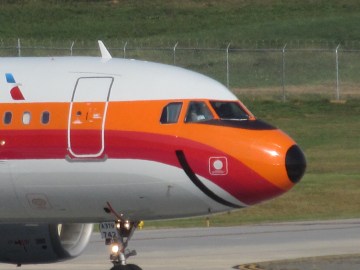 Every once in a while I happen to stumble across a cool livery that almost (but not entirely) makes up for all those planes I haven’t been able to see (yet). Such was the case when United’s Star Alliance stopped by. Not only did it park at a gate where it was easy to see, but it taxied out on time and took off right in front of me. Thank you so much, Star Alliance!
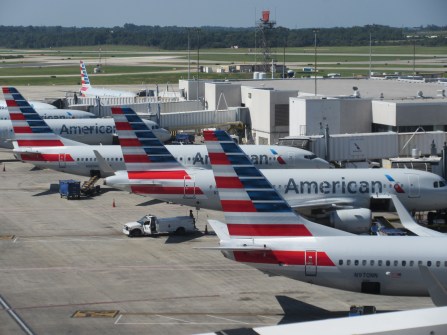 In the United States, National Aviation Day is held on August 19. Here’s how I’ve celebrated at work the last couple years:
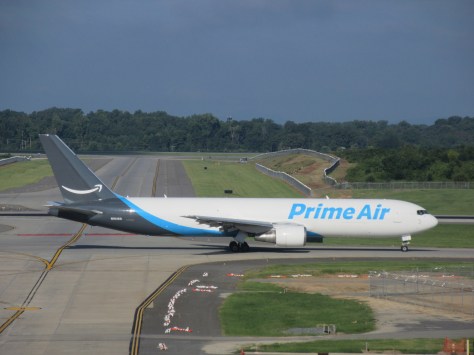 I kicked things off early by parking on the very top level of the garage. No way was I going to pass up the chance to do a little pre-event plane spotting! (And lets face it, if they handed out diplomas for plane spotting from parking garages, I’d have a PhD!) My dedication paid off – I got my very first look at Amazon’s Prime Air 767. Sweet!
 The tour began with a visit to the Operations Tower. Wow – what a view! And what a lot of computer equipment! The Operations Tower is responsible for all aircraft movement on the ramp. I wish we had a set-up like that for deice pad control in the winter! But then again, the ramp at CLT is a MUCH busier place with 600+ flights per day. We were allowed to wander around the room, examine the different work stations and ask questions. I honestly could have stayed for hours!


 After lunch, the awesomeness continued with a tour of the training facility. We met in a conference room first to learn a little about the training program itself and watch a video about the history of American Airlines. Then we visited the egress training area where Flight Attendants learn how to operate various types of emergency exits. Seeing the cut-away plane interiors was actually quite fascinating. They even had an E145 fuselage (minus the nose, wings and tail).


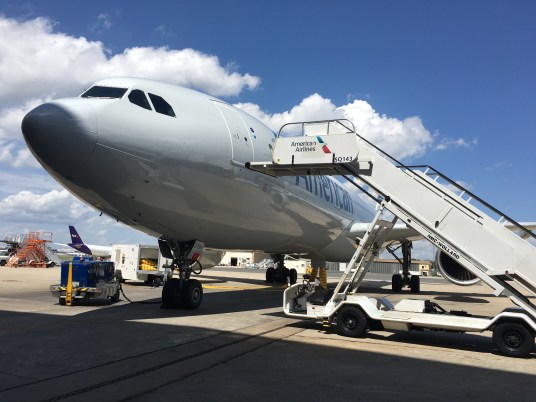
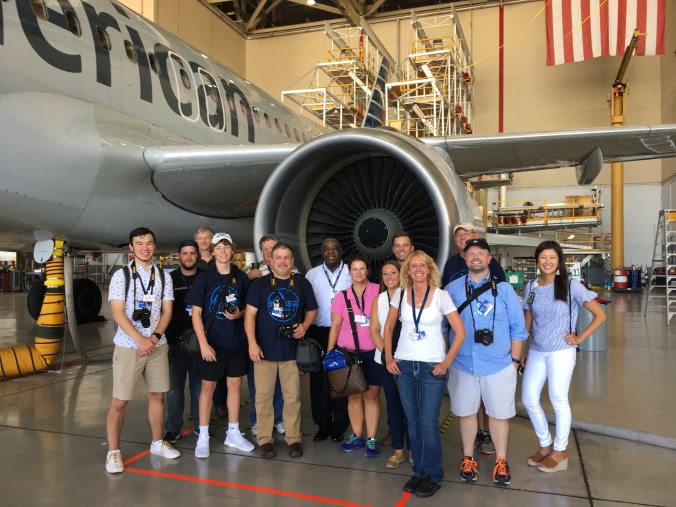
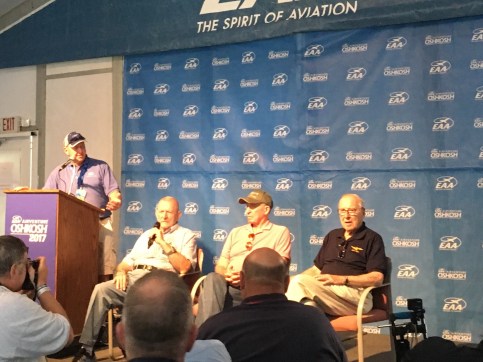
 EAA’s Airventure runs for a full seven days. I was there for five of them. This sounds like it should be plenty of time to see everything, but it isn’t. Not even close! However, I can say with full confidence that I made the most of the time that I had.